
Viking Blog
Helm Viking – 7 Powerful Designs That Defined Norse Warriors
Dec
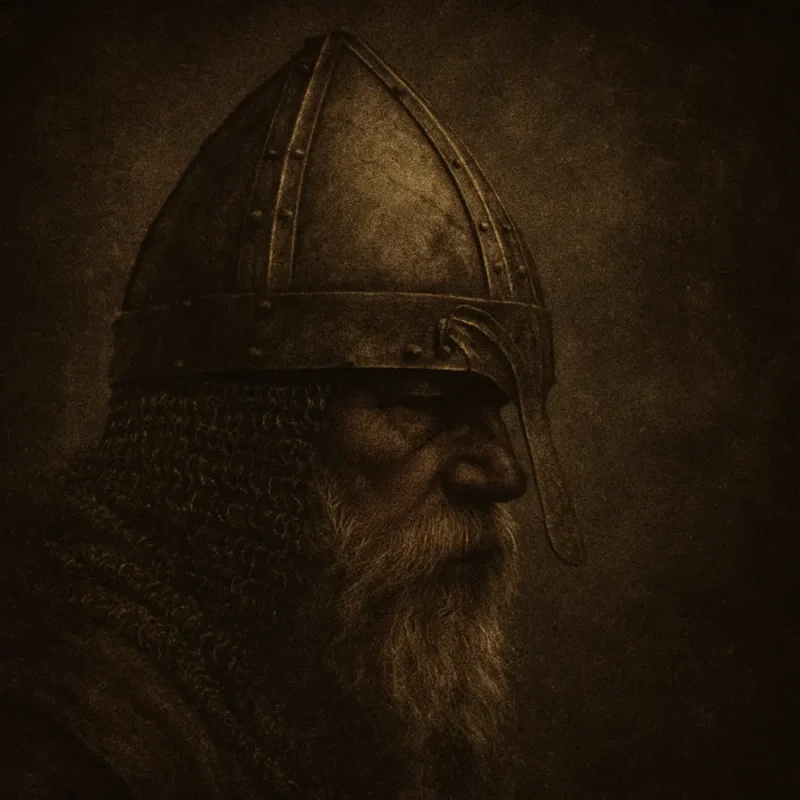
When people think of Viking warriors, they often picture a fierce fighter. This fighter wears iron armor and a horned helmet. But the real Helm Viking was far more practical — designed for survival, not spectacle. Norse warriors wore these helmets during fierce raids and sea battles. They show a mix of skill, bravery, and culture.
The Helm Viking stood out from later medieval armor. It balanced strength and weight. It was tough enough to block weapons but light enough for quick movement. Here are seven helmet designs that shaped the identity of Norse warriors.
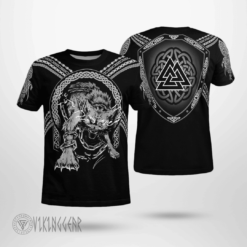
1. The Gjermundbu Helm – The Only Complete Viking Helmet Ever Found
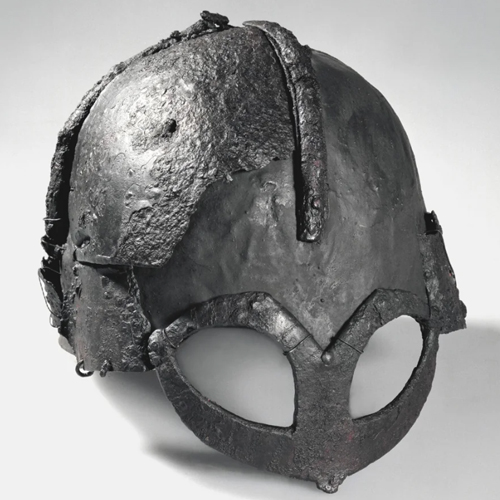
Archaeologists found the Gjermundbu helm in Norway in 1943. It is the only Viking helmet we have that is almost complete. Dating back to the 10th century, artisans crafted it from iron. It had a rounded cap and a unique nose guard (nasal).
This helmet shows that Vikings cared about practicality. It has no horns or fancy designs, but provides strong protection. It’s a key artifact for learning how Norse warriors prepared for battle.
2. The Nasal Helm – Signature of Viking Warriors
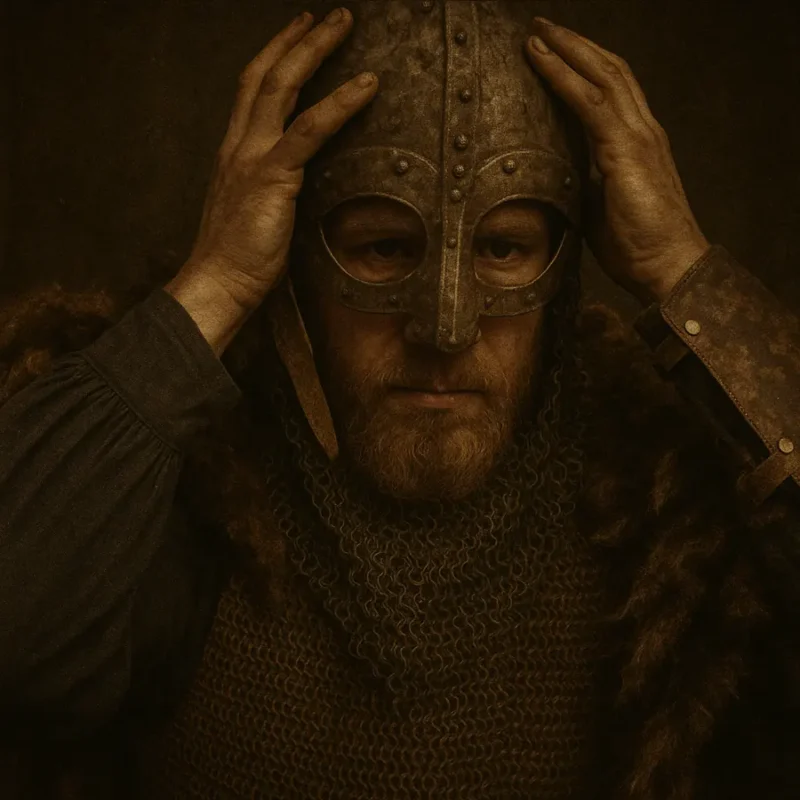
Among all Helm Viking designs, the nasal helm was the most common. It consisted of a rounded or conical iron dome with a vertical guard over the nose. This feature shielded the face from sword and axe strikes. It did so without blocking visibility.
Its smart design influenced European helmets for centuries. This shows how Viking innovation shaped medieval armor.
3. Spangenhelm – The Iron-Ribbed Construction
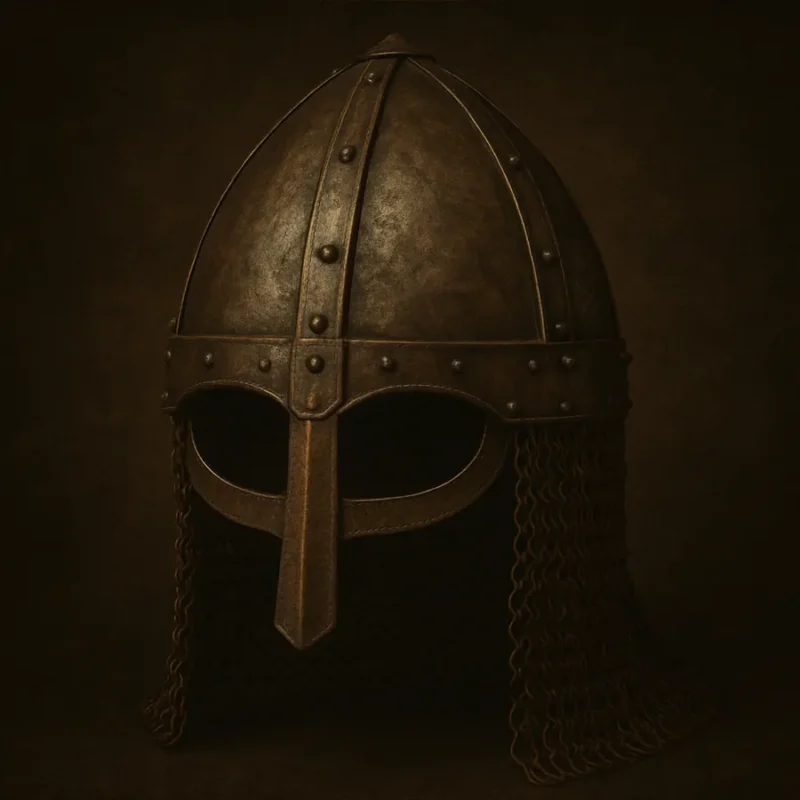
Another classic Helm Viking type is the spangenhelm. Workers join curved iron plates to make this helmet. Metal bands called spangen hold them together. This design makes helmets lighter. It also makes them easier to forge and more affordable for many warriors.
The spangenhelm often included a mail curtain (aventail) to protect the neck. It was both durable and adaptable—a hallmark of Viking engineering.
4. The Leather Helm – For the Everyday Fighter
Not every Viking could afford iron. Many wore hardened leather helmets reinforced with bronze or iron strips. This simpler helm offered Vikings reasonable protection while remaining light and comfortable.
Raiders and sailors liked leather helmets. They valued the freedom to move with comfort on long journeys. Some artisans added simple carvings or fur trim. They mixed function and style.
5. The Chainmail-Covered Helm – For Elite Warriors
For nobles or champions, the Helm Viking often included a chainmail curtain. This curtain shielded the neck and shoulders. This headgear offered full coverage. It allowed the wearer to turn their head without restriction in combat.
Such helmets symbolized wealth and prestige. Owning one meant belonging to the warrior elite — men who commanded respect both in life and in legend.
6. Decorative Helms – Symbol of Power and Faith
Most helmets were plain. Yet, some Helm Viking examples had symbolic engravings, bronze fittings, or animal designs. Odin held dragons, ravens, and wolves as sacred. They were common symbols of strength and protection.
Decorative touches transformed helmets. They became symbols of identity, courage, and faith, not just simple armor. In Norse culture, even battle gear could carry the blessings of the gods.
7. The War Leader’s Helm – A Mark of Authority
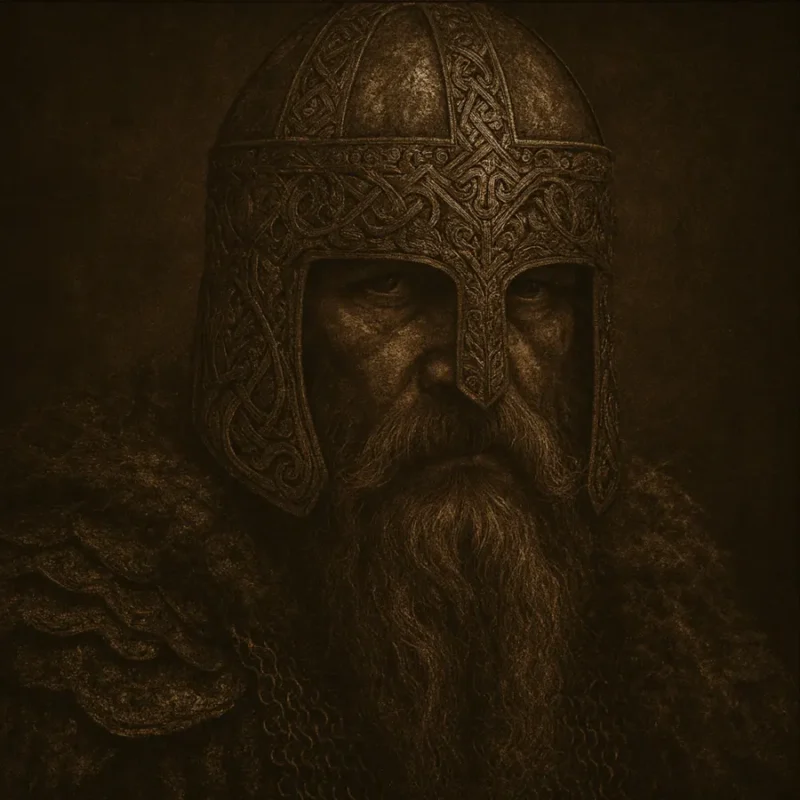
Chieftains and warlords often wore fancy helm Viking designs. This helped them stand out on the battlefield. These helms may have bronze edges, inlaid patterns, or unique shapes. Each feature showed the wearer’s rank.
These helmets were more than gear. They showed leadership. They represented a man who fought alongside his warriors and led them.
The Craftsmanship Behind the Helm Viking
Forging a Viking helm required both strength and skill. Blacksmiths heated iron in stone furnaces. Then, they hammered it into curved plates and joined them with rivets. Artisans handcrafted every helmet, often customizing it for its owner.
Some helmets had runic inscriptions for luck or protection. This shows the Vikings’ strong link between craftsmanship and spirituality. Their process showed their belief. Courage, fate, and craftsmanship were all part of a divine order.
Why the Helm Viking Still Inspires Us
The Helm Viking remains one of the most iconic symbols of Norse heritage. Its design, even without horns, shows Viking life. It reflects strength, discipline, and a readiness for battle.
Today, reenactors, collectors, and fans of Norse culture recreate these helmets. They do this to honor their legacy. The Viking helm symbolizes bravery and defiance. You see it in museums, films, and tattoo designs.
Conclusion – The Legacy of the Helm Viking
The Helm Viking highlights how a basic leather cap and Gjermundbu’s iron dome show a society that valued both practicality and spirituality. Each design shows the Viking spirit. They exhibit fearlessness, adaptability, and a strong connection to their gods and community.
The helmet was more than protection; it was a crown of courage. The Helm Viking is still a powerful symbol of Norse strength and the warrior spirit.