Viking Blog
Viking Protection Rune: 5 Powerful Symbols Used for Safety and Strength

Aug
The Vikings were known for their daring voyages, fierce warriors, and rich symbolic traditions. Runes played an important role in early Germanic and Norse cultures, serving as a writing system and appearing in stories of magic and protection. Today, the term “Viking protection rune” is often used for symbols associated with safety, courage, and spiritual strength. However, some of these meanings come from later traditions or modern interpretations. Let’s explore five powerful symbols, their historical backgrounds, and what they represent today.
What Is a Viking Protection Rune?
The term “Viking protection rune” is commonly used today to describe runic symbols associated with safety and strength. Historically, runes were letters used for writing. The 24-character Elder Futhark predates the Viking Age, while the 16-character Younger Futhark was widely used during that period. Medieval Norse literature also describes magical uses of runes, although many of the individual meanings popular today are modern interpretations. The five symbols below reflect a mixture of ancient runic traditions, later Icelandic magic, and contemporary Norse-inspired symbolism.
1. Algiz (ᛉ) – The Elk Rune of Protection

Algiz (ᛉ) is one of the most recognizable runes associated with protection in modern Norse-inspired symbolism. It belongs to the Elder Futhark and is sometimes called the “Elk Rune,” although its original name and interpretation remain subjects of scholarly discussion.
- Appearance: A vertical line with two upward branches, resembling raised arms or antlers.
- Historical Background: Algiz was originally a character in the Elder Futhark writing system. There is no clear evidence that Vikings routinely carved this specific rune onto shields or weapons for protection.
- Modern Meaning: Today, Algiz is commonly associated with protection, awareness, personal boundaries, and inner strength.
- Modern Connection: Popular in tattoos, jewelry, and Viking-inspired artwork, Algiz is often chosen as a personal reminder to stay alert, resilient, and strong.
2. Aegishjalmur (Ægishjálmur) – The Helm of Awe

Ægishjálmur, known as the “Helm of Awe,” is a powerful symbol associated with protection and the ability to inspire fear in enemies. The name appears in medieval Norse literature, while the familiar eight-armed magical stave is documented in later Icelandic traditions rather than securely dated Viking Age artifacts.
- Appearance: Eight arms extend from a central point, often ending in forked or trident-like shapes.
- Historical Background: The Helm of Awe is mentioned in medieval Norse stories, including the legend of Fafnir. However, these literary references do not establish that the familiar eight-armed design was used by Viking warriors.
- Later Magical Tradition: In Icelandic magical manuscripts, Ægishjálmur appears as a protective stave associated with awe and defense.
- Modern Symbolism: Today, it represents courage, protection, determination, and the strength to face adversity.
3. Tiwaz (ᛏ) – The Rune of the God Tyr

Tiwaz (ᛏ) is a rune associated with Týr, the Norse god known for courage, duty, and sacrifice. Its connection with victory and determination makes it a meaningful symbol in modern Norse-inspired designs.
- Appearance: A vertical line topped by two diagonal branches, resembling an upward-pointing spear or arrow.
- Historical Background: The medieval poem Sigrdrífumál describes carving victory runes on a sword and invoking the name of Týr. However, this does not prove that every Viking warrior used Tiwaz as a protective charm.
- Modern Meaning: Tiwaz is often associated with courage, honor, justice, responsibility, and determination.
- Personal Symbolism: Today, many people choose Tiwaz as a reminder to stand by their principles and face challenges with integrity.
Find Your Protection Rune
Four Rune Designs. Choose the One That Speaks to You.
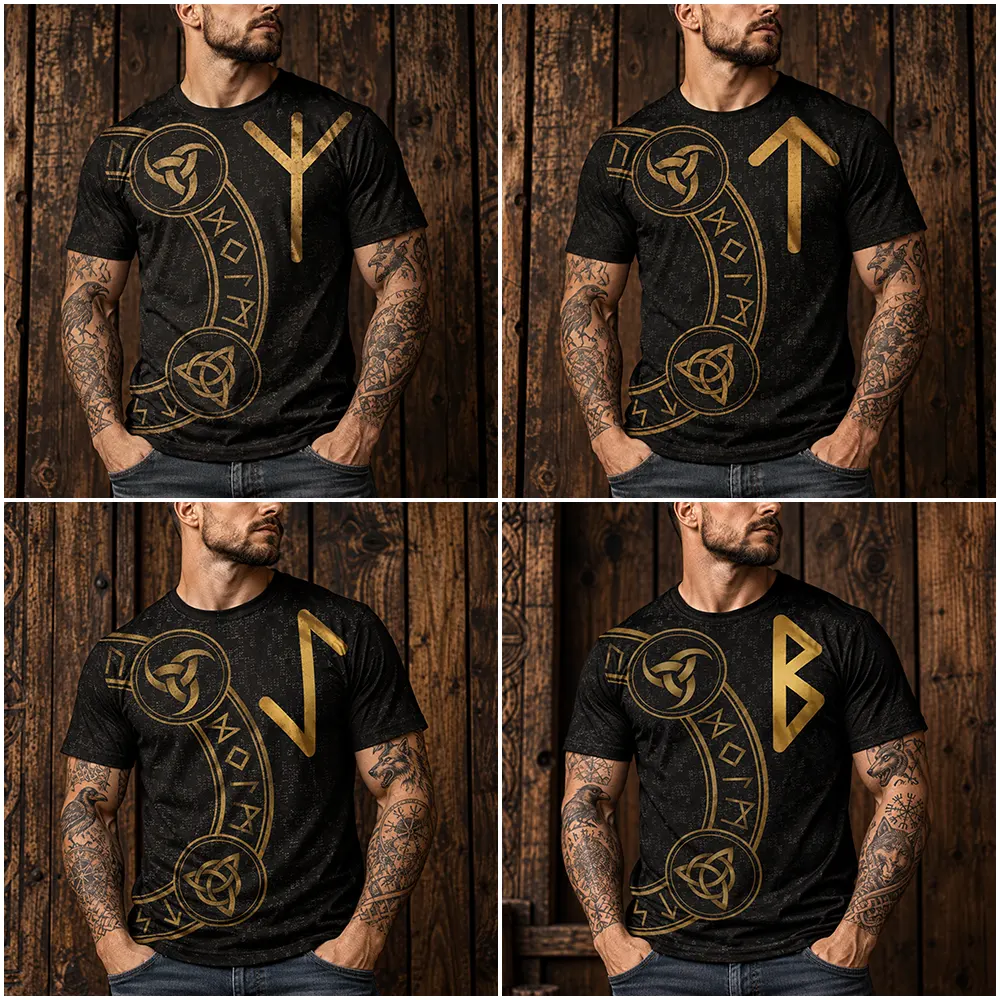
$27.99
4. Eihwaz (ᛇ) – The Rune of Endurance and Defense

Eihwaz (ᛇ) is an Elder Futhark rune commonly associated with the yew tree. In modern rune symbolism, it represents endurance, resilience, and the ability to remain strong through difficult times.
- Appearance: A vertical line with short branches extending in opposite directions.
- Historical Background: Eihwaz belongs to the Elder Futhark writing system. Its association with the yew tree comes from traditional interpretations of rune names, while many of its spiritual meanings developed through later symbolism.
- Modern Meaning: Eihwaz is often linked to resilience, stability, personal transformation, and inner strength.
- Personal Symbolism: In contemporary Norse-inspired art, Eihwaz serves as a reminder to remain grounded and determined when facing uncertainty.
5. Berkana (ᛒ) – The Rune of Growth and Healing

Berkana (ᛒ) is an Elder Futhark rune traditionally associated with the birch tree. In modern interpretations, it has become a symbol of growth, renewal, nurturing, and new beginnings.
- Appearance: A vertical line with two angular branches on one side, resembling the letter B.
- Historical Background: Berkana belongs to the Elder Futhark and is commonly connected with the birch tree through rune-name traditions. Claims that Norse women routinely carved this rune onto cradles for protection are not supported by clear historical evidence.
- Modern Meaning: Today, Berkana is associated with personal growth, family, nurturing, renewal, and emotional well-being.
- Personal Symbolism: Often featured in modern tattoos and jewelry, Berkana can serve as a reminder of new beginnings, care for loved ones, and the strength found in personal growth.
How Did Vikings Use Protection Runes?
Runes were an important part of early Norse writing and culture. Archaeological discoveries show that runic inscriptions appeared on stones, weapons, tools, and everyday objects. Medieval Norse literature also describes runes used in magical practices, including rituals associated with healing, victory, and protection.
However, it is important to distinguish historical evidence from later traditions and modern interpretations.
- Historical Inscriptions: Runes were used for names, memorials, messages, and other forms of communication.
- Literary Traditions: Medieval Norse texts describe magical uses of runes, including attempts to seek protection, healing, or victory.
- Later Icelandic Magic: Magical staves such as Ægishjálmur became associated with protection in Icelandic traditions after the Viking Age.
- Modern Practices: Today, people often wear rune-inspired jewelry, choose rune tattoos, or display these symbols as personal reminders of courage, resilience, and strength.
While individual rune meanings have evolved over time, their historical and cultural significance continues to inspire people around the world.
The Legacy of Viking Protection Runes
Today, Viking-inspired rune symbolism continues to evolve, connecting ancient writing traditions with modern ideas of protection, courage, and personal strength. Many people seek spiritual strength, safety, or a connection to their Norse heritage. They often turn to these ancient symbols. Viking runes inspire and empower us. We see them in tattoos, jewelry, and mindful practices. They remind us of resilience and strength.

Sources & Further Reading
- National Museum of Denmark – Runic Magic
Explores runic magic in Norse literature and the historical evidence behind Viking Age rune practices. - University of Copenhagen – Runology
Explains the history of runic writing, including the Elder Futhark, Younger Futhark, and medieval runes.