
Viking Blog
Viking Dress – 7 Stunning Styles That Define Norse Beauty
Dec
Viking women were strong and independent. They had a unique sense of style, too. Their clothing reflected both practicality and pride, blending durability with beauty. The Viking dress was more than fabric. It showed identity, social rank, and skill. It celebrated the Norse way of life.
Viking clothing was colorful and well-made. Graves and settlements show it was also good for the cold northern climate. Explore these seven beautiful Viking dress styles that show off the strength of Norse fashion.




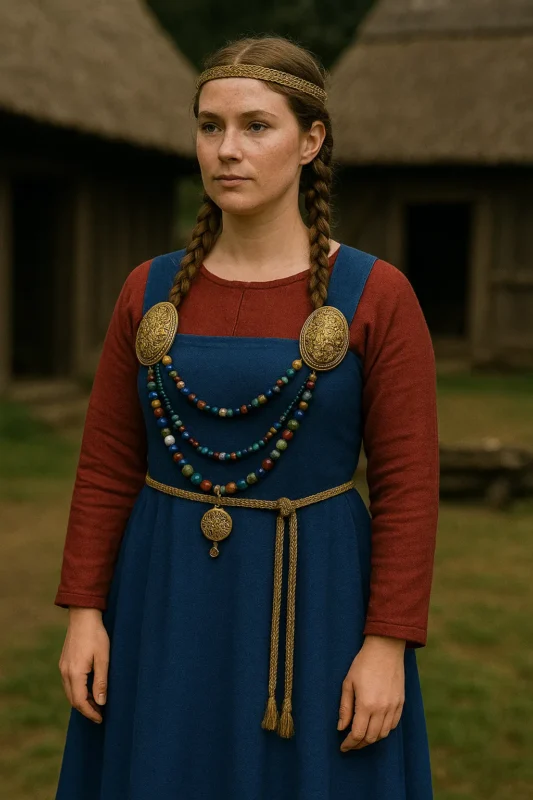
1. The Apron Dress (Smokkr)
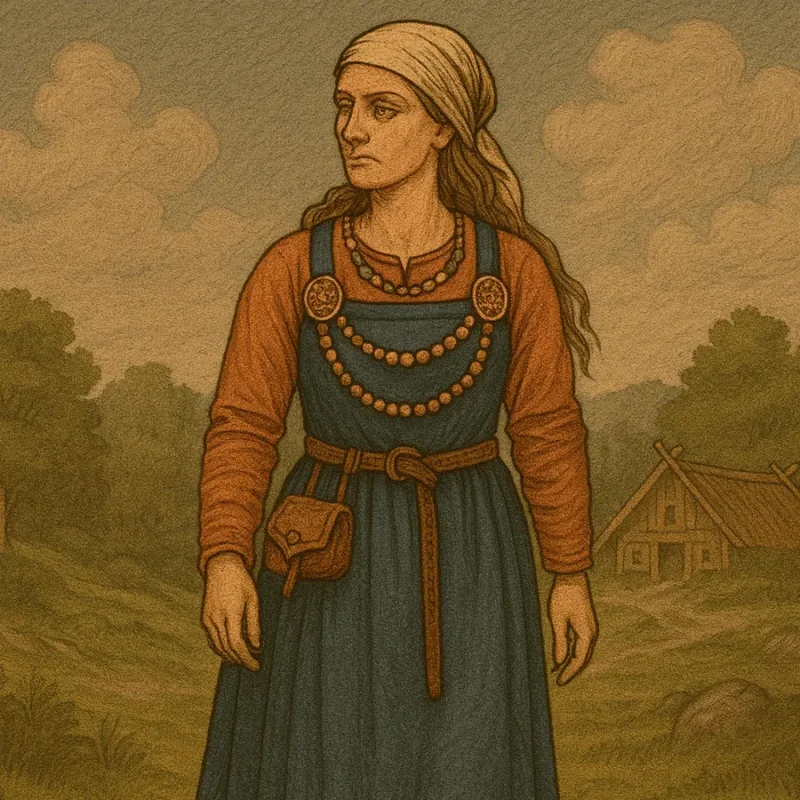
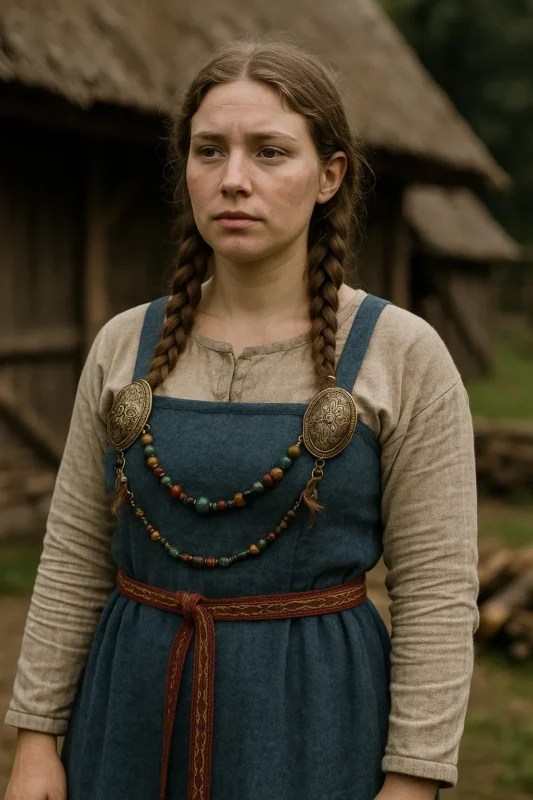
The most iconic Viking dress was the smokkr, or apron dress. Worn over an under-tunic, it stayed in place with two brooches on the shoulders. It was often decorated with beads, chains, or pendants.
Made from wool or linen, the apron dress was practical yet graceful. Women added colorful trims or embroidery along the edges, making each piece unique. The brooches were not fasteners—they symbolized femininity and social standing.
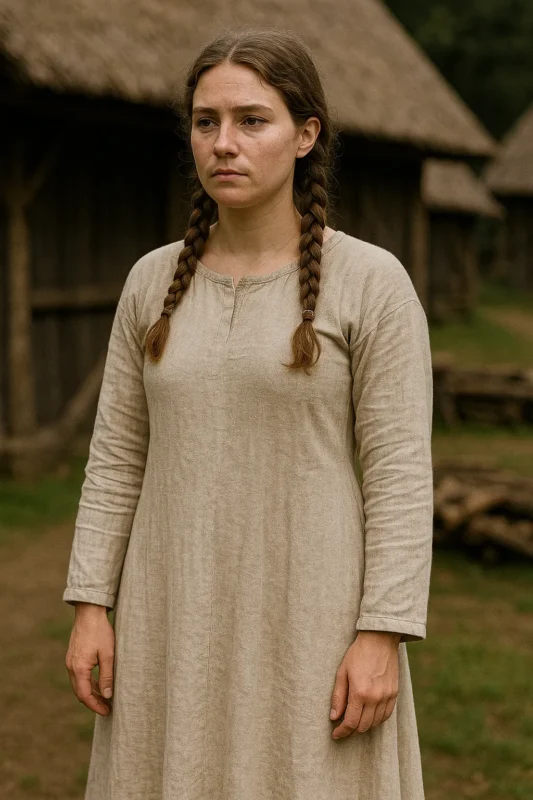
2. The Linen Underdress (Serk)
Underneath the apron dress, women wore a light linen garment called the serk. This inner Viking dress acted as a base layer, keeping the wearer warm in winter and cool in summer.
The serk had long sleeves that reached the ankles. It often featured delicate stitching at the cuffs. Wealthy women sometimes dyed their hair with natural pigments. They also added decorative bands woven in geometric Viking patterns.
3. The Festive Dress of the Chieftain’s Wife
Noblewomen wore fancy clothes at feasts and ceremonies. These garments showed off their wealth and rank. A chieftain’s wife wore a Viking dress dyed in deep blues, reds, or greens — colors made from rare, imported dyes.
Gold and silver brooches took the place of simple bronze ones. Strings of glass beads or amber hung across the chest. These garments aim to impress. They represent power, prosperity, and the gods’ favor.
4. Woolen Cloaks and Shawls
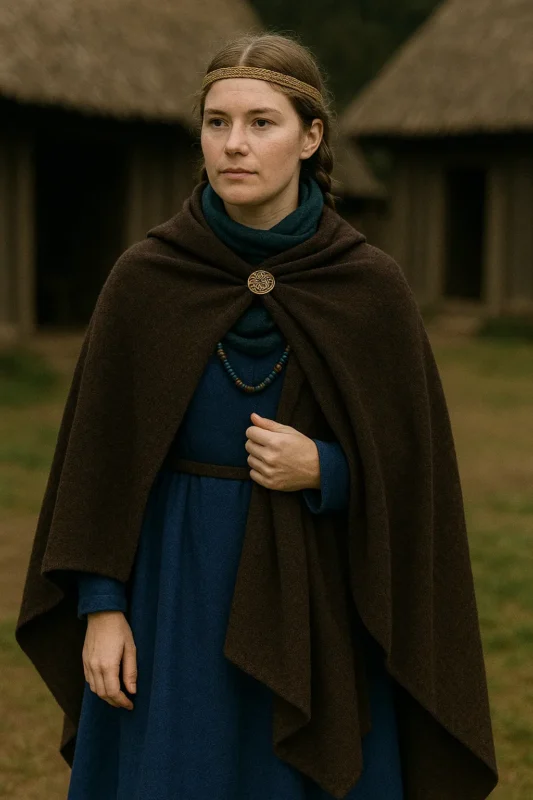
Viking women wore woolen cloaks or shawls to shield themselves from cold winds. They fastened these garments with ornate brooches. These garments are outerwear, but they add a touch of elegance to Viking dress.
The cloaks were often cut from thick wool and trimmed with fur or decorative braid. They highlighted a woman’s weaving skills and creativity. These traits were vital in Norse society.
5. The Working Woman’s Dress
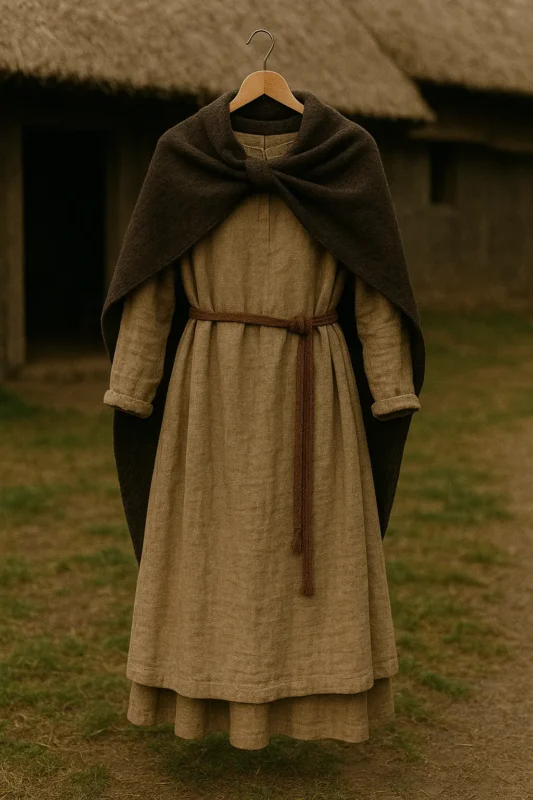
Not all Viking women were nobles. Farmers’ wives, weavers, and traders wore simpler Viking dresses. They made these from undyed wool or linen. These clothes were strong and easy to fix. They were practical for everyday tasks like cooking, spinning, and caring for livestock.
Even so, Viking women took pride in their appearance. Simple belts, beads, and pins brought a unique flair to everyday outfits. They showed that function and beauty could go hand in hand.
6. Dresses with Embroidery and Trim
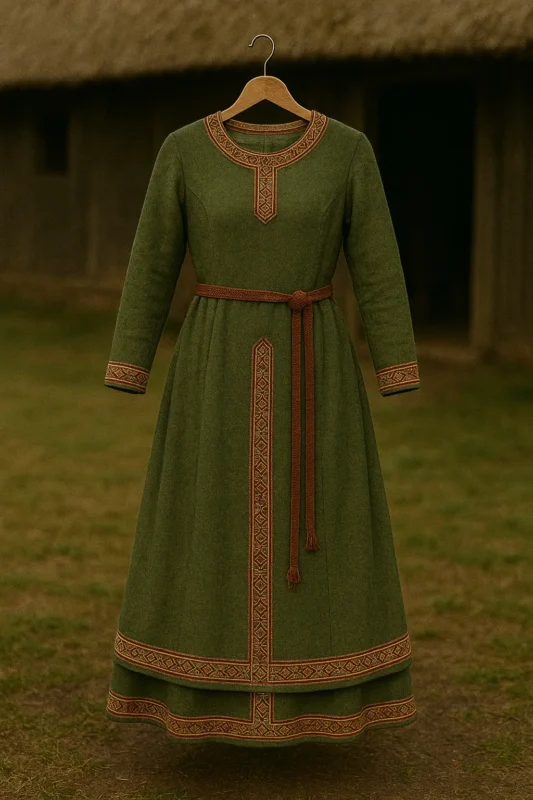
Embroidery was a subtle but powerful way to personalize a Viking dress. Women often used colored thread or woven trim to decorate hems, cuffs, and necklines. We call this technique tablet weaving.
Designs featured knots, spirals, and animal motifs drawn from Norse art. Each pattern carried meaning — protection, fertility, or luck. These details showed skill and care. They turned the dress from clothing into a piece of meaningful art.
7. The Viking Wedding Dress
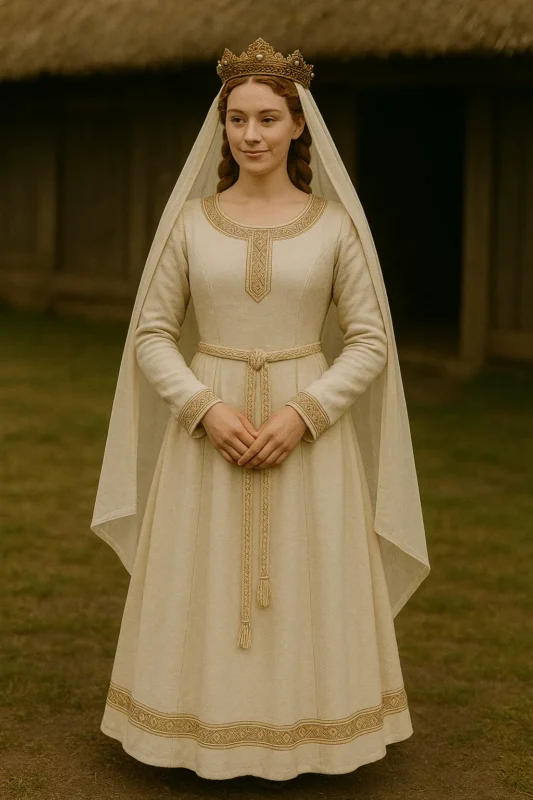
A wedding was one of the most important events in Norse life, and the bride’s Viking dress was a masterpiece. A sign of loyalty, it wore silver jewelry, beads, and a fancy cloak, which was usually blue.
Some brides wore crowns made of woven gold threads. This symbolized purity and strength. The garment showed the ceremony’s focus on honor and unity. This made it one of the most beautiful traditions in Viking fashion.
How the Viking Dress Was Made
Every Viking dress began with raw materials — wool from sheep and flax for linen. Talented weavers and dyers were women. They used natural colors from plants such as madder, woad, and birch. Looms stood in most homes, turning threads into textiles that could last for years.
People saw dyeing and weaving as both useful and sacred. The goddess Frigg, who symbolized family and home life, tied them together. Each dress carried the mark of its maker’s hands — a blend of art, labor, and love.
Why the Viking Dress Still Inspires Today
The beauty of Viking dress still captivates historians, fashion designers, and reenactors. Its layered and strong design shows the elegance and resilience of Viking women.
Modern takes often mix old patterns with new materials. They blend ancient symbols with today’s style. The Viking look, whether in films or handmade replicas, is a symbol of beauty and strength.
Conclusion – The Legacy of the Viking Dress
The Viking dress was more than attire — it was identity. Viking women showed their identity through colors, fabrics, and craftsmanship. They felt pride in their capabilities and had a strong connection to their culture.
From the simple linen serk to the grand wedding gown, each piece tells a story. They show resilience, artistry, and the strength of women. The Viking dress is a lasting symbol of Northern beauty. It is elegant, timeless, and true to its roots.