Viking Blog
Viking Symbol for Family: Unveiling 8 Mythical Marks of Norse Kinship and Legacy

Apr
When thinking of Vikings, we often picture Thor’s thunder, Loki’s cunning, or Odin’s wise gaze. Beneath these legendary figures is another key part of Norse culture: family. This aspect is quieter but just as important.
Family and kinship played an important role in Viking Age society. Runestones honoring parents, spouses, and other relatives reveal the value placed on ancestry and family connections. Although there was no single universally recognized Viking symbol for family, several Norse symbols have become meaningful representations of heritage, unity, and belonging in modern times.
In this article, we explore 8 Viking-inspired symbols that hold special meaning for families today. Drawing from ancient runic traditions, Norse mythology, and later interpretations, these symbols offer powerful ways to celebrate family bonds and generational legacy.
1. Ingwaz – The Rune of Family Harmony and Growth

Ingwaz is often chosen as a Viking-inspired symbol for family in modern artwork. Its name is traditionally linked to Ing, a figure sometimes associated with Freyr. Today, this rune is commonly interpreted as representing fertility, growth, and family unity. Its diamond-like shape also lends itself to modern ideas of a nurturing home.
In modern interpretations, Ingwaz can symbolize the growth of generations and the bond between parents and children. It is a meaningful choice for those seeking a Viking symbol for family that evokes calm, love, and harmony at home.
2. Othala – A Symbol of Heritage and Ancestral Legacy

If you’re looking for a Viking-inspired symbol for family roots, Othala is a meaningful choice. This Elder Futhark rune is associated with inheritance and ancestral land, ideas that extend beyond material wealth. In modern symbolism, it can also represent the values, memories, and traditions shared across generations.
As a family symbol today, Othala reminds us of where we come from and the lineage we continue. It is a meaningful choice for anyone who wants to honor their heritage and celebrate the bonds that connect family members through time.
3. Vegvisir – The Compass That Guides the Family Home

The Vegvisir, often called the Norse Compass, is an Icelandic magical symbol associated with guidance and finding one’s way through difficult conditions. Its earliest known surviving depiction dates to the 19th century, long after the Viking Age. Although it was not a documented Viking family symbol, its message of direction and perseverance has inspired many modern interpretations.
Today, Vegvisir can serve as a Viking-inspired symbol for family, representing guidance, protection, and the hope of finding one’s way home. For families, it symbolizes the strength to face life’s challenges together and the enduring connection that brings loved ones back to one another.
4. Yggdrasil – The Family Tree of Norse Mythology

Yggdrasil, the World Tree, is a powerful metaphor for family. It connects the realms of Norse cosmology, reflecting the interconnected nature of existence. In modern family symbolism, its roots, trunk, and branches can represent past, present, and future generations, much like the structure of a family tree.
Today, Yggdrasil is a meaningful Viking-inspired symbol for family heritage and unity. Its roots can remind us of our ancestors, while its branches represent the generations yet to come. The World Tree offers a powerful image of the enduring bonds that connect family members across time and distance.
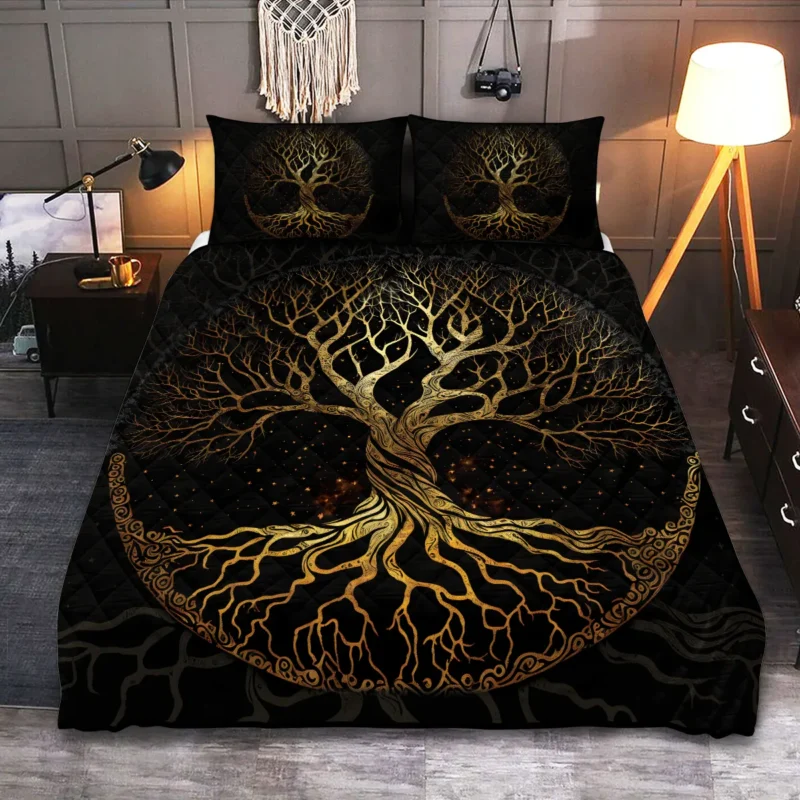
Bring the Tree of Life Into Your Home
Inspired by the World Tree of Norse mythology, this Viking Tree of Life Quilt Bedding Set brings a distinctive Nordic touch to your bedroom.
5. Valknut – Honoring the Eternal Family Cycle

The Valknut consists of three interlocking triangles and appears in Viking Age imagery. It is often associated with Odin, death, and the afterlife, although its original meaning remains uncertain. In modern Norse-inspired symbolism, some people connect the Valknut with remembrance, sacrifice, and the enduring ties between generations.
As a modern Viking-inspired family symbol, the Valknut can serve as a personal tribute to loved ones who have passed away. It represents the idea that memories and emotional bonds can continue beyond death, connecting the past with the generations that follow.
6. Bind Runes – Personalized Viking Symbols for Families

Bind-runes combine two or more runic characters into a single design. Historical examples appear in runic inscriptions, where these combinations often served practical writing purposes. Today, bind-runes are also used in modern Norse-inspired artwork to express personal meanings. For example, combining Ingwaz (growth), Algiz (protection), and Gebo (giving) can create a symbolic design representing family unity and care.
Creating a personalized Viking-inspired family symbol with bind-runes offers a meaningful way to celebrate love, protection, and shared values. While these modern combinations are not documented Viking Age family traditions, they draw inspiration from the visual heritage of ancient runic writing.
7. Gebo – The Rune of Love, Loyalty, and Mutual Giving

Gebo, shaped like an “X,” is an Elder Futhark rune associated with the idea of a gift. In modern Norse-inspired symbolism, it also represents partnership, balance, and the mutual exchange of care. Within a family, these values reflect the quiet connections that create strong bonds, including love, generosity, and shared responsibility.
As a modern Viking-inspired symbol for family, Gebo reminds us of the importance of giving and receiving love. It represents the strength that comes from caring for, supporting, and respecting one another.
8. Huginn and Muninn – Guardians of Family Memory and Thought

Odin’s two ravens, Huginn (Thought) and Muninn (Memory), travel across the world gathering knowledge and bringing news back to Odin. In Norse mythology, they reflect the importance of thought and memory, two qualities that can also hold special meaning within family life.
In modern Norse-inspired symbolism, Huginn and Muninn can represent family memory, shared wisdom, and the importance of preserving ancestral stories. They remind us to honor the past while making thoughtful choices that shape the future for the generations to come.
Why Viking Symbols for Family Still Matter Today
In today’s busy world, Viking-inspired symbols for family continue to hold personal meaning. Whether chosen for a tattoo, a logo, a piece of jewelry, or home decor, these symbols can express belonging, strength, and continuity. They serve as reminders that our lives are connected to something bigger than ourselves.
Each symbol, from Yggdrasil to Othala, brings together historical traditions and modern interpretations. They offer a bridge between Norse cultural heritage and our ongoing stories of love, loyalty, and family legacy.
Final Thoughts
Choosing a Viking-inspired symbol for family is more than selecting a beautiful design. It is a personal way to honor your roots, celebrate your loved ones, and express the enduring spirit of kinship. While not all eight symbols were historically used by Vikings to represent family, their ancient origins and modern interpretations continue to inspire meaningful expressions of heritage, unity, and love across generations.
Sources & Further Reading
- National Museum of Denmark – Rune Stones
Explores Viking Age runestones and their role in honoring family members, ancestors, and loved ones. - University of Copenhagen – Runology
Provides historical background on runic writing and the development of runic alphabets in Scandinavia. - Swedish History Museum – The Mythological World of the Vikings
Explains Norse cosmology, including Yggdrasil and its role in connecting the worlds of Norse mythology. - Projekt Forlǫg – Origins of the Vegvísir Symbol
Examines the historical origins of Vegvísir using 19th-century Icelandic magical manuscripts, including Huld from 1860. - Swedish History Museum – Viking Age Picture Stone
Documents a Viking Age picture stone featuring a motif associated with the Valknut and discusses uncertainties in interpreting its imagery.