
Viking Blog
Yggdrasil – The World Tree in Norse Mythology
Mar
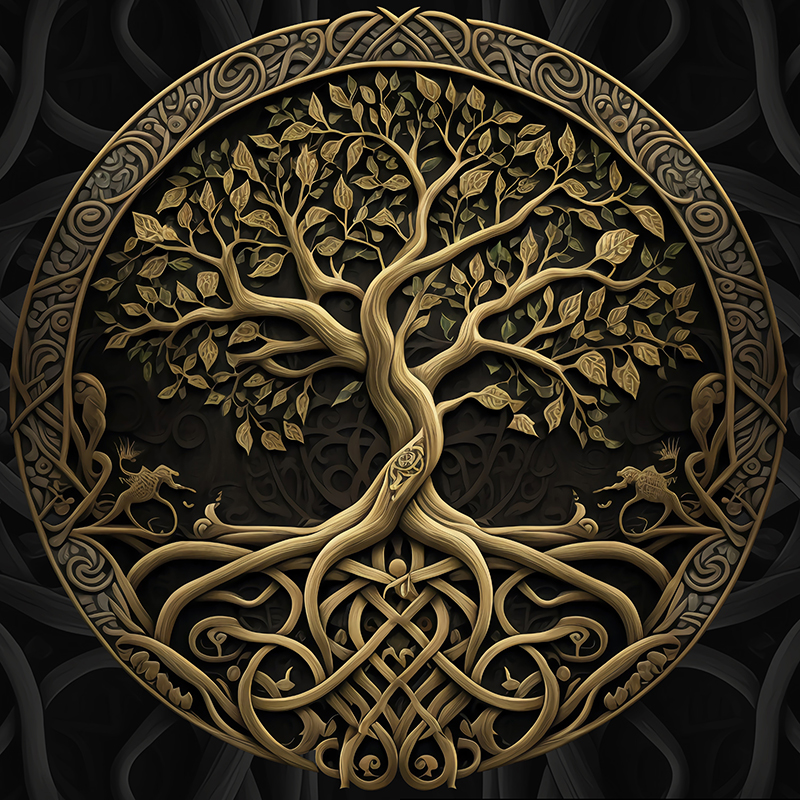
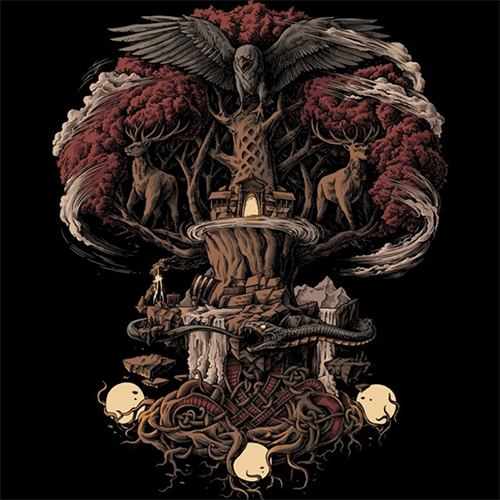
In Norse mythology, Yggdrasil is a giant ash tree. It connects the Nine Realms and acts as the axis mundi. This sacred tree is not only the center of the universe but also symbolizes life, wisdom, and the fate of all beings. Its branches reach across the universe. Its deep roots hold the very foundations of existence.
1. Yggdrasil – The Origin of All Things
Yggdrasil is a giant ash tree. Its branches stretch across the sky, creating an illusion of infinity. Its roots reach deep into three important realms:
- Asgard – The realm of the Aesir gods, a place of divine power and celestial order.
- Midgard – The realm of humans, located at the center between the divine and the earthly.
- Helheim – The realm of the dead, where souls live who did not die in glory.
These roots draw sustenance from three sacred wells:
- Urðarbrunnr (Well of Fate): This well in Asgard is cared for by the Norns. They are three strong goddesses who shape destiny. They carve runes into Yggdrasil’s bark, determining the destiny of all living beings.
- Mímisbrunnr (Well of Wisdom): Mimir guards this well, which holds endless knowledge. Odin, the Allfather, gave up one eye for a drink from the waters. In return, he gained unmatched wisdom.
- Hvergelmir (Primordial Well): In the frozen depths of Niflheim lies Hvergelmir. This well is the source of every river in the cosmos. It is also the lair of Nidhogg, the monstrous dragon that gnaws at Yggdrasil’s roots.
Despite its immense power, Yggdrasil is not impervious to harm. The creatures inside it always wear it down, but it still stands strong as the backbone of the universe.
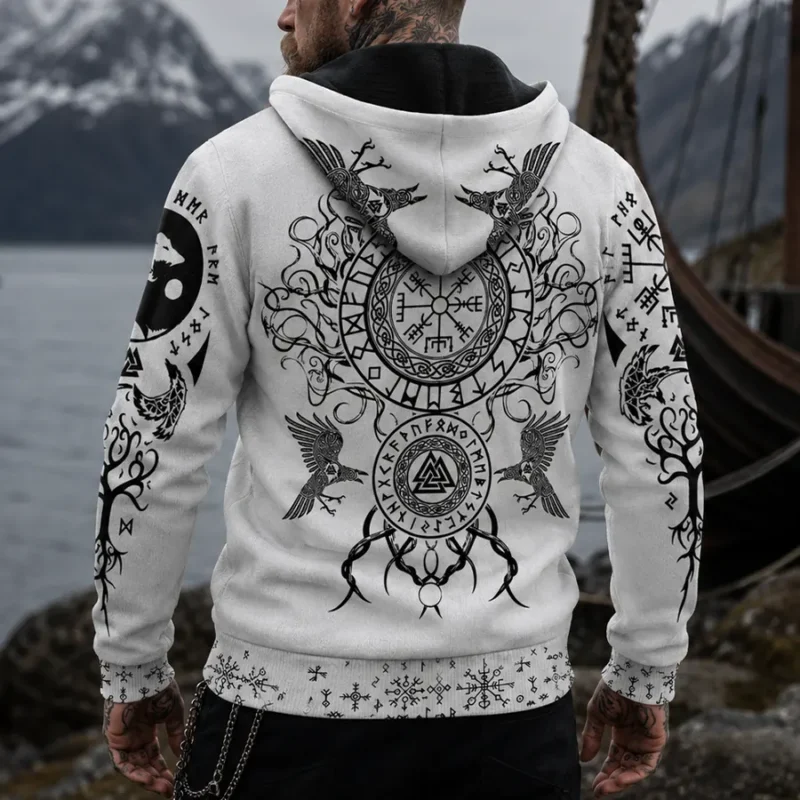
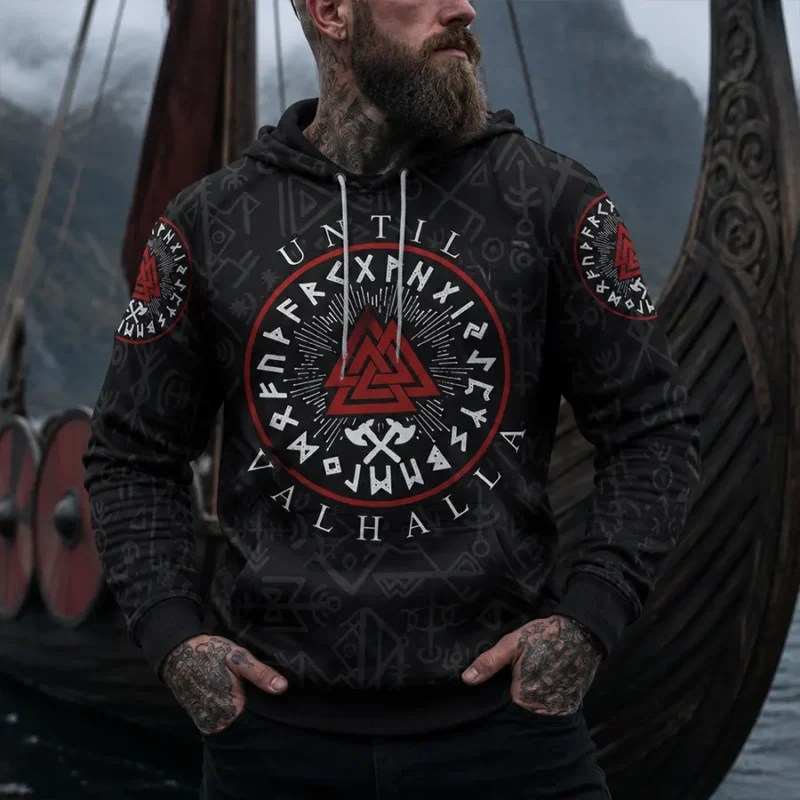
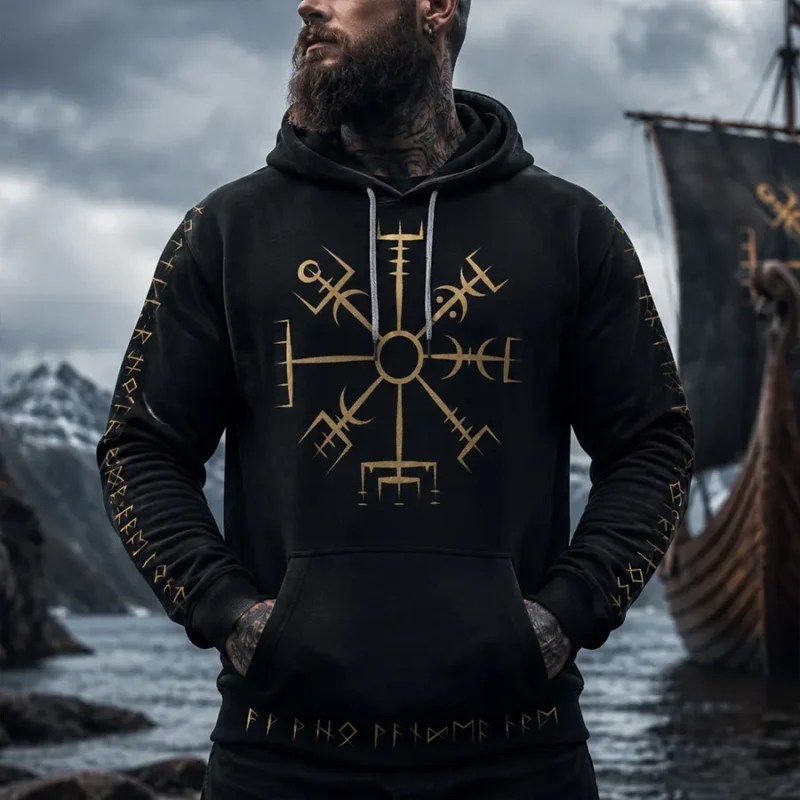
This intricate design brings together some of the most powerful symbols in Norse mythology. At its heart lies the Vegvisir, the legendary Viking compass believed to guide warriors through storms and uncertainty. Surrounding it are ancient runes, ravens associated with Odin’s wisdom, and the iconic Valknut, a symbol often linked to courage, sacrifice, and the path to Valhalla. Branch-like patterns evoke Yggdrasil, the World Tree that connects the Nine Realms, reinforcing themes of destiny and interconnected fate. The balanced composition creates a visual journey through Norse belief, reminding us that true strength comes not only from battle, but from wisdom, purpose, and perseverance.
2. The Nine Realms of the Universe
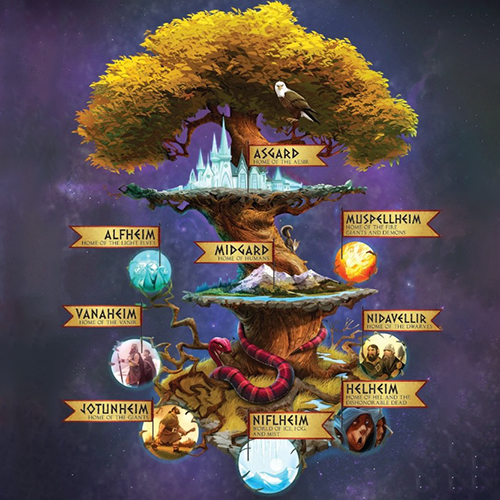
Yggdrasil connects the Nine Realms, each serving a distinct role in the Norse cosmos:
- Asgard – Home of the Aesir gods, including Odin, Thor, and Frigg. It is a realm of grandeur, featuring the mighty halls of Valhalla.
- Vanaheim – Homeland of the Vanir gods, beings associated with fertility, nature, and magic. The Aesir-Vanir war resulted in a fragile truce between these two divine races.
- Midgard – Humans live in the center of Yggdrasil. They are safe thanks to the Bifrost, a rainbow bridge watched over by Heimdall.
- Jotunheim – The land of the Jotnar (giants) is an ancient enemy of the gods. Jotunheim’s wild wilderness stands in stark contrast to the divine order of Asgard.
- Alfheim – The realm of the Light Elves, luminous beings of great wisdom and beauty. They are often linked to creativity and inspiration.
- Svartalfheim – Nidavellir is the underground home of the Dwarves. Skilled blacksmiths are among them. They make powerful items, including Thor’s hammer, Mjölnir.
- Muspelheim – A realm of fire and chaos, home to Surtr, a powerful fire giant who will ignite the world during Ragnarök.
- Niflheim – A realm of frost and mist, shrouded in perpetual cold and ice. Many consider it one of the oldest realms in existence.
- Helheim – The underworld where those who die of illness or old age live. Ruled by the goddess Hel, it is a grim and desolate place, contrasting with the glory of Valhalla.
Each realm is vital for cosmic balance. They show how everything is connected.
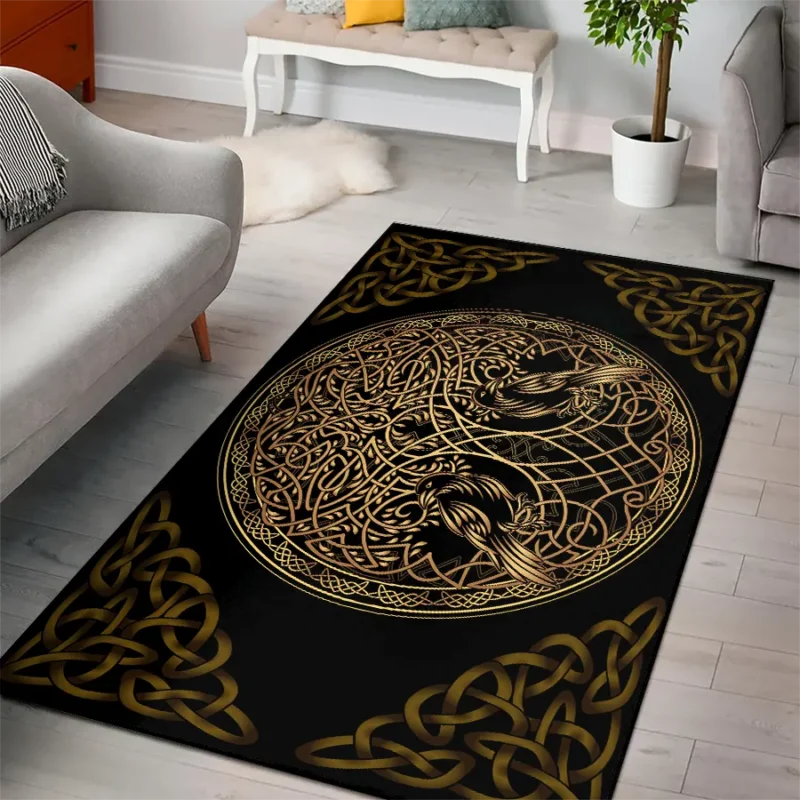
This striking design centers on the Tree of Life, intricately woven with Celtic knotwork that symbolizes the eternal connection between all realms of existence. Encircling the sacred tree are two ravens, evoking the legendary messengers of Odin-guardians of wisdom, memory, and insight in Norse mythology. The radiant gold artwork stands boldly against a dark background, creating a powerful contrast that reflects both mystery and enlightenment. Flowing knot patterns extend throughout the composition, reinforcing themes of destiny, continuity, and spiritual strength. As in Viking tradition, the image serves as a reminder that wisdom grows through experience and that every path is connected to a greater purpose.
3. Creatures Guarding Yggdrasil
Yggdrasil is home to many mythical creatures, each contributing to the cosmic balance.
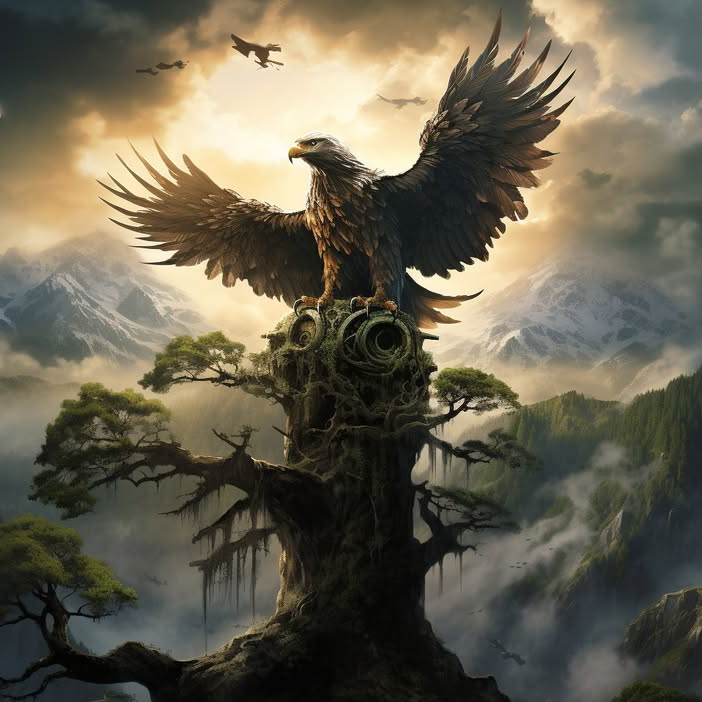
- A Giant Eagle: This eagle sits high on Yggdrasil. Its huge wings flap, stirring winds that blow through the realms.
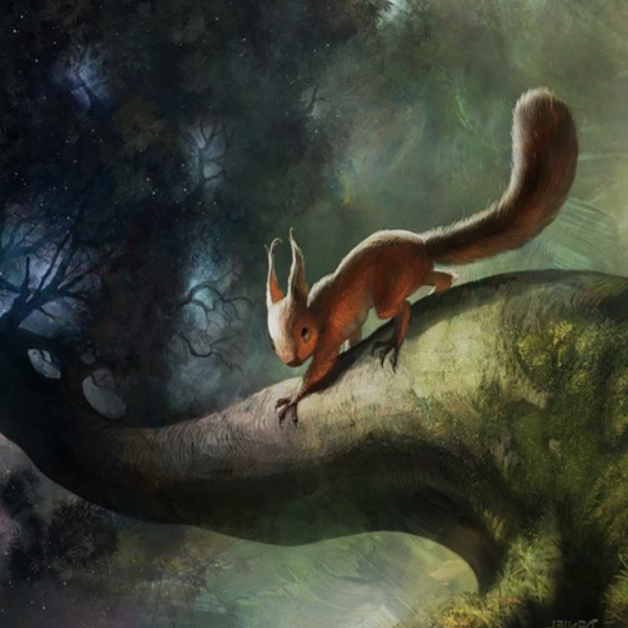
- Ratatoskr – A sly squirrel darts among the trees’ roots and branches. It carries insults between the eagle and Níðhöggr, spreading discord.
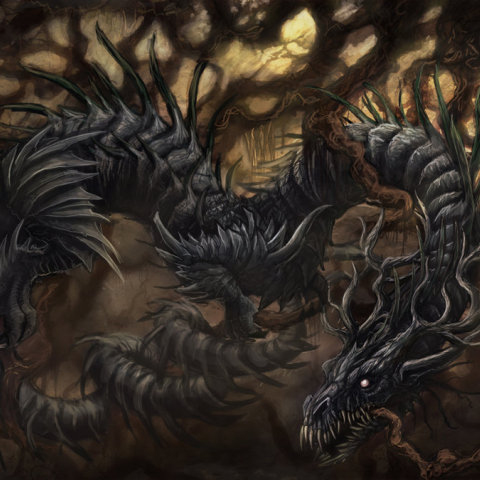
- Nidhogg – A fierce dragon bites at Yggdrasil’s roots. It represents chaos and destruction.
- Four Stags (Dáinn, Dvalinn, Duneyrr, Duraþrór) – The deer eat Yggdrasil’s leaves. They show the endless cycle of life and renewal.
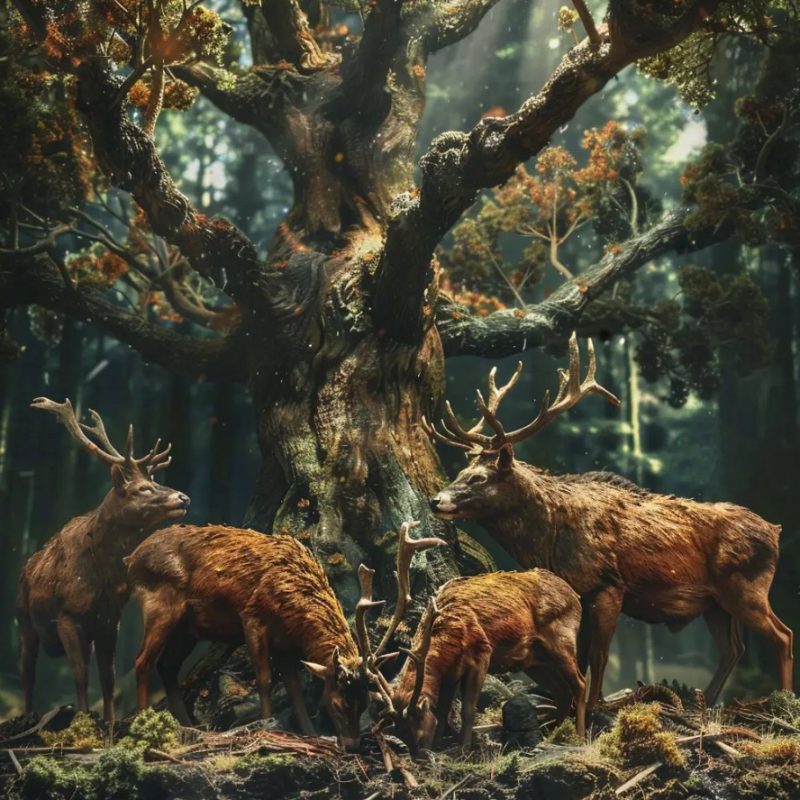
These creatures may threaten Yggdrasil, but they also help it grow stronger. This shows the Norse belief in the balance between order and chaos.
4. Yggdrasil in Ragnarok
Ragnarok is the predicted end of the Norse universe. It will bring a huge battle that will shake Yggdrasil’s foundations. As the world crumbles:
- Yggdrasil will tremble with great intensity. Its branches and roots will quake under the weight of doom.
- The gods will fight one last time. Their enemies are the forces of chaos: Loki, Fenrir, and Surtr.
- The sky will blaze as Surtr’s fiery sword scorches the heavens. It will consume the world in flames.
Yet, amid the destruction, hope endures. After Ragnarok, a new world will rise from the ashes. Líf and Lífthrasir will find shelter in Yggdrasil. They will later emerge to repopulate the earth and ensure humankind’s survival.
Yggdrasil symbolizes both destruction and renewal, along with eternal continuity.

5. Conclusion
Yggdrasil is far more than just a mythical tree—it is the very essence of Norse cosmology. It shows the link between worlds. It represents the balance of life and death. Also, it reflects the cycle of creation and destruction. Mythology shows the Norse view of life. They believed life was always changing, but chaos led to renewal.
Yggdrasil still shapes modern books, movies, and art today. The World Tree symbolizes wisdom, resilience, and the fight between order and chaos. It captivates us and inspires deep reflection on how everything is connected.

Viking Symbol for Family: Unveiling 8 Mythical Marks of Norse Kinship and Legacy
When thinking of Vikings, we often picture Thor’s thunder, Loki’s cunning, or Odin’s wise gaze. Beneath these legendary figures is another key part of Norse culture: family. This aspect is quieter but as important.
In the tough Viking Age landscapes, people saw kinship as sacred, not just important. The Viking symbol for family was more than a design. It served as a sacred mark of identity, protection, and continuity. The Norse people created a rich tapestry of symbols. These symbols, from runes to sacred emblems, honored family strength and generational legacy.
In this article, we look at 8 Viking symbols that are both mythical and meaningful for families. Each symbol comes from the ancient wisdom of Norse mythology.