
Viking Blog
Norse Compass: 7 Fascinating Facts About the Viking Vegvísir
Aug
The Vikings were known for their daring voyages across rough seas and unfamiliar lands. But how did these ancient mariners find their way without modern navigation tools? The Norse Compass, known as Vegvísir, is often associated with Viking exploration, although its documented origins belong to later Icelandic magical traditions. Today, this distinctive eight-armed symbol represents guidance, protection, and resilience in modern Norse-inspired culture. Here are seven fascinating facts about the Vegvísir, its history, and the meanings it carries today.
1. What is the Norse Compass (Vegvísir)?
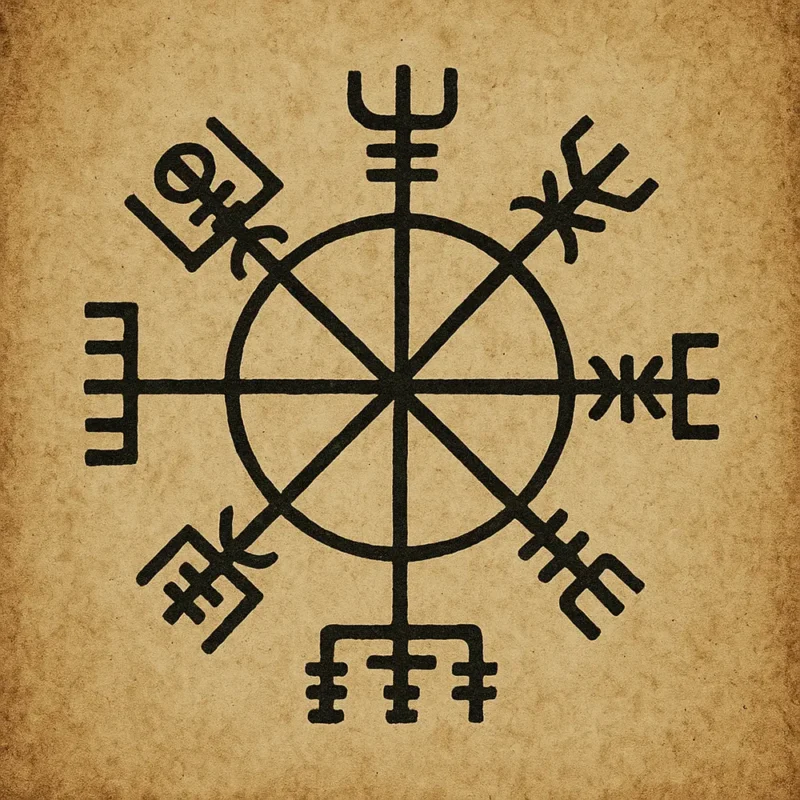
The Vegvísir, often called the Norse Compass or Viking Compass, is an Icelandic magical stave. It features eight arms extending from a central point, resembling a compass rose. Its name is formed from Icelandic words related to a path or road and a guide, giving it the meaning of “wayfinder.”
- Symbolic Use: In Icelandic magical tradition, Vegvísir was believed to help its bearer avoid getting lost during storms or unfamiliar journeys. Today, it is widely interpreted as a symbol of personal direction, protection, and resilience.
2. The Vegvísir Is Not an Ancient Viking Artifact
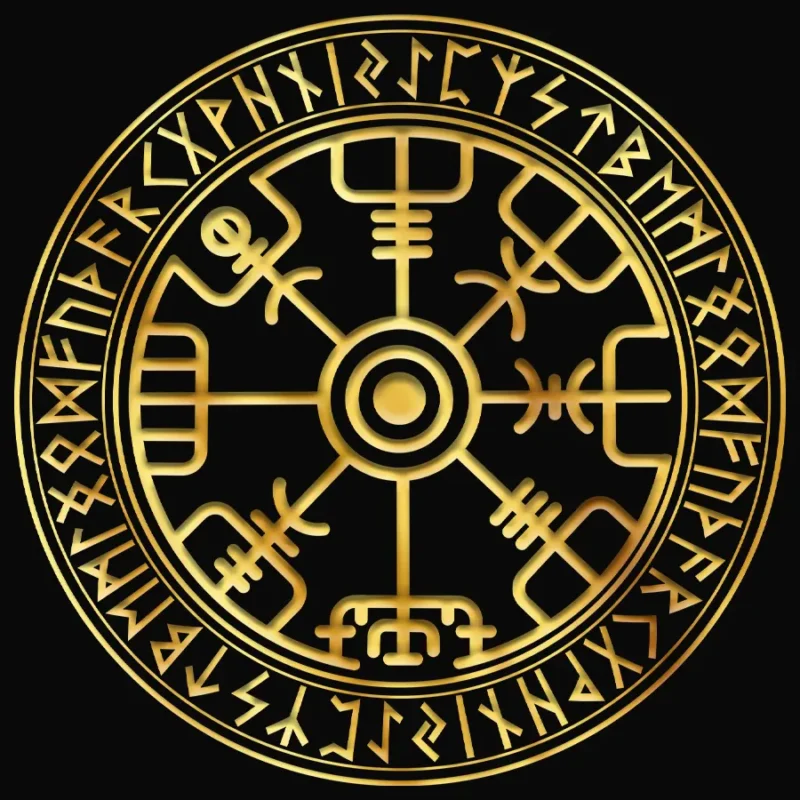
Despite its popular association with the Vikings, the Vegvísir is not a documented Viking Age symbol. Its earliest known surviving depictions appear in 19th-century Icelandic magical manuscripts. One of the best-known examples is the Huld manuscript, compiled by Geir Vigfússon in 1860. No verified Viking Age artifact has been found bearing this symbol.
- Why the Confusion? The Vegvísir resembles a compass and is associated with guidance, making it easy to connect with the Vikings’ famous seafaring traditions.
- Modern Interpretation: Although it is not known to have been used by Viking sailors, Vegvísir has become a popular symbol of exploration, protection, and personal direction in modern Norse-inspired art.
3. Magical Symbolism: More Than Just a Compass
The Norse Compass was not a physical navigation instrument like a magnetic compass or a sun compass. Instead, Vegvísir belonged to Icelandic magical traditions, where it was believed to protect travelers from losing their way in difficult conditions.
- Protection and Guidance: The 19th-century Huld manuscript describes Vegvísir as a sign that could be carried to avoid getting lost in storms or bad weather. This reflects a traditional magical belief rather than a proven navigational function.
- Spiritual Meaning: Today, many people embrace the Norse Compass as a symbol of inner strength, personal direction, and resilience when facing life’s challenges.
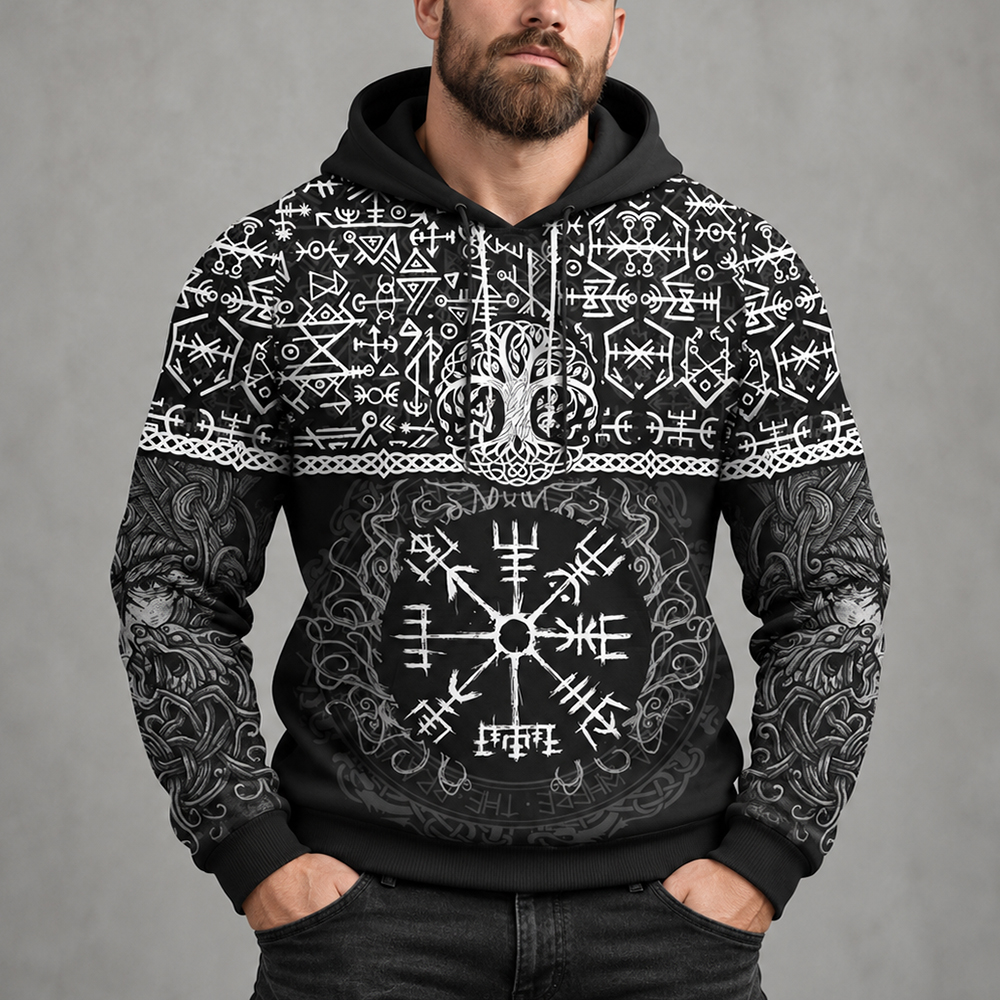
Carry the Spirit of the Vegvisir
Inspired by the Icelandic Vegvisir symbol of guidance, this Runic Vegvisir Viking Hoodie brings bold Norse-inspired artwork to your everyday style.
4. Connections to Other Norse Symbols
The Norse Compass shares visual similarities with Ægishjálmur, also known as the Helm of Awe. Both are associated with protection in later Icelandic magical traditions, although their designs and intended purposes differ.
- Symbolic Tradition: Vegvísir and the familiar eight-armed Ægishjálmur belong to the tradition of Icelandic magical staves, or galdrastafir. Their documented designs should not be confused with Viking Age runes.
- Design Elements: Their symmetrical patterns and radiating arms make them recognizable motifs in modern Norse-inspired tattoos, jewelry, and artwork.
5. The Vegvísir in Modern Culture
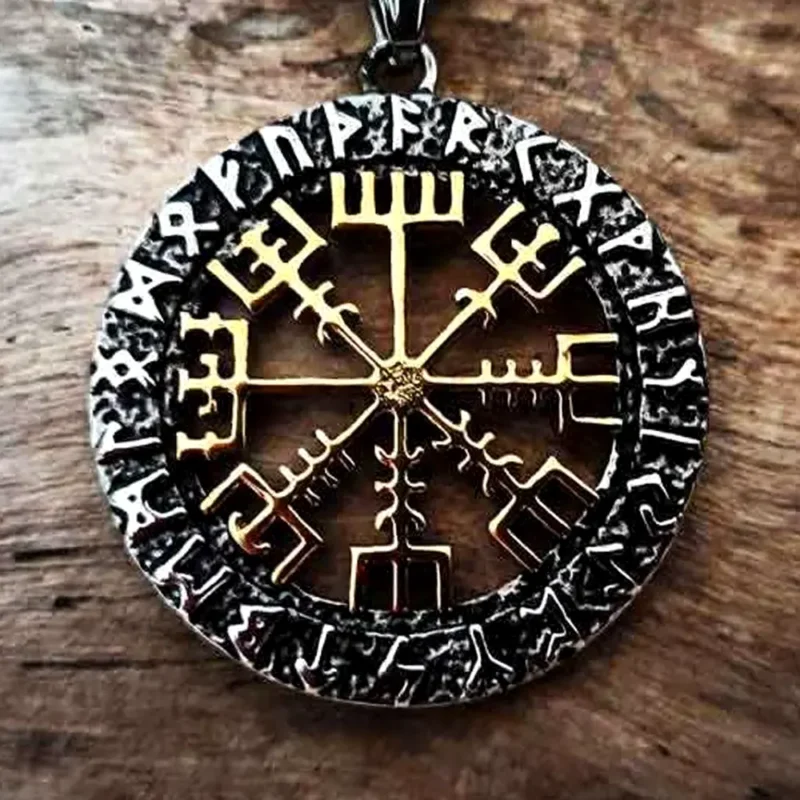
In recent years, the Norse compass has become a powerful symbol of modern culture.
- Popular Tattoos and Jewelry: Many people show off the Vegvísir on jewelry, clothing, and tattoos. People often choose it for guidance, protection, or a link to their Norse heritage.
- Viking Festivals and Reenactments: This symbol appears at Norse-themed events. It shows our interest in history and our spiritual goals.
- Pop Culture: The Norse Compass appears in TV shows, books, video games, and movies about Viking lore and mythology.
6. The Sunstone and Viking Navigation
Although Vegvísir was not a Viking Age navigation tool, Norse sailors developed remarkable skills for traveling across the North Atlantic. Researchers continue to study the methods they may have used to navigate without modern instruments.
- Sunstone (Sólarsteinn): Medieval Icelandic sources mention a mysterious sunstone. Some researchers have suggested that light-polarizing crystals, such as Iceland spar, might have helped sailors estimate the Sun’s position under certain cloudy conditions. However, there is no conclusive archaeological evidence that Vikings used these crystals as navigation instruments.
- Expert Seafaring: Viking sailors may have relied on observations of the Sun, stars, winds, waves, and other natural signs. Their successful voyages demonstrate considerable maritime knowledge, even though many details of their navigation techniques remain uncertain.
7. How to Use the Norse Compass Today
Though not a physical compass, Vegvísir has become a meaningful symbol in modern Norse-inspired culture. People use it in different ways to express personal beliefs, cultural interests, and a sense of direction in life.
- As a Personal Talisman: Many people wear the Norse Compass as a reminder of protection, resilience, and the importance of staying true to their chosen path.
- In Mindfulness and Meditation: Vegvísir can serve as a visual reminder to remain focused and grounded when facing uncertainty or difficult decisions.
- Cultural Heritage: For those interested in Icelandic traditions and Norse-inspired art, the symbol offers a way to appreciate later Icelandic magical folklore while recognizing its distinct historical origins.
Conclusion: The Enduring Mystery of the Norse Compass
The Norse Compass – the Vegvísir – is a symbol that bridges the worlds of history, myth, and modern meaning. The Vegvísir inspires many. People wear it as a talisman, ink it as a tattoo, or study it as part of a magical tradition. It offers guidance and strength. Though it didn’t steer Viking ships, its legacy remains strong. It serves as a beacon for the lost and brave. Even in dark times, there’s always a path forward.

Sources & Further Reading
- NorseMap – Vegvisir Symbols from the Huld Manuscript
Documents the Vegvísir illustration in the Huld manuscript of 1860, preserved by the National and University Library of Iceland. - The Viking Ship Museum – Instrument Navigation in the Viking Age
Examines the available evidence for Viking navigation instruments and explains why the historical use of sunstones remains uncertain. - American Journal of Physics – Viking Navigation: From Speculative History to Laboratory Exercise on Polarization
Discusses experimental models of navigation using polarized skylight while distinguishing scientific feasibility from unproven historical use.