
Viking Blog
Norse Compass Tattoo – 7 Powerful Designs with Deep Viking Meanings

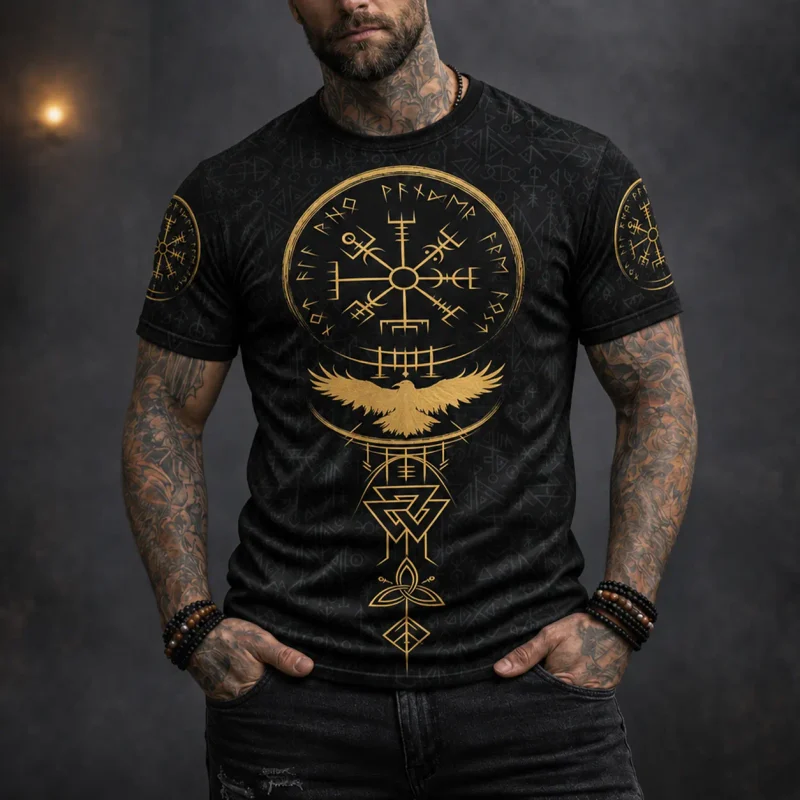
Sep
Few symbols in modern Norse-inspired tattoo art are as striking or mysterious as the Norse compass tattoo. Known in Icelandic as Vegvísir, this distinctive magical stave was traditionally associated with finding one’s way through storms and unfamiliar places. Although often linked to the Vikings today, its earliest known surviving records date to 19th-century Iceland, long after the Viking Age.
A Norse compass tattoo can symbolize guidance, resilience, and the determination to stay on one’s chosen path. From minimalist designs to elaborate artwork featuring runes, ravens, and Viking ships, here are seven powerful tattoo ideas and the meanings people associate with them today.
1. Traditional Vegvísir Tattoo

The traditional Vegvísir design features eight distinct staves extending from a central point, creating a striking geometric pattern. Found in 19th-century Icelandic magical manuscripts, the symbol was believed to help its bearer avoid getting lost in storms or unfamiliar surroundings. Its historical meaning relates to guidance rather than a specific meaning assigned to each individual arm.
Today, this black-ink Norse compass tattoo is popular among those who value direction, resilience, and personal strength. Its balanced design also makes it an appealing choice for people who prefer clean, meaningful tattoo artwork.
2. Norse Compass with Runes

Another popular Norse compass tattoo combines Vegvísir with runic inscriptions. The surrounding runes may represent a personal name, meaningful phrase, or values such as strength and protection. Although Vegvísir comes from later Icelandic magical traditions, runes were used as a writing system in Scandinavia long before and during the Viking Age.
In Norse mythology, Odin gains knowledge of the runes through his sacrifice on Yggdrasil, the World Tree. Combining these elements creates a modern tattoo design inspired by different parts of Norse cultural history. Anyone choosing runic lettering should verify the characters and translation carefully to avoid incorrect or meaningless inscriptions.
3. Compass with Viking Ships
For those drawn to adventure, a Norse compass tattoo with Viking ships is powerful. You can find the Vegvísir above or next to a longship. It symbolizes journeys over treacherous seas. It represents courage, exploration, and the Viking spirit of discovery.
4. Compass with Yggdrasil

Yggdrasil, the World Tree, connects all realms of Norse mythology. A Norse compass tattoo represents direction, destiny, and balance when paired together. This design emphasizes harmony with nature and the interconnectedness of all things.
5. Compass with Wolves or Ravens

Animals hold an important place in Norse mythology, making them popular additions to modern compass tattoo designs. Odin’s ravens, Huginn and Muninn, are associated with thought and memory, while wolves such as Fenrir represent powerful and often dangerous forces in Norse mythology.
A Norse compass tattoo featuring ravens can express wisdom, awareness, and the search for knowledge. Designs featuring wolves are often chosen to symbolize strength, independence, and resilience in modern tattoo art. Combining these animals with Vegvísir creates a personal design that brings together Icelandic wayfinding symbolism and Norse mythological imagery.
6. Minimalist Compass Tattoo
Not every design needs to be large or complex. A minimalist Norse compass tattoo features clean, simple lines. It is often found on the wrist, forearm, or behind the ear. This discreet style is perfect for those who want the symbolism without a bold statement.
7. Large Back or Chest Compass Piece
For a dramatic effect, some choose a full-size Norse compass tattoo across the back or chest. This design can feature runes, weapons, ships, or landscapes. It creates strong artwork that celebrates Viking identity. It represents not only guidance but also a commitment to heritage and strength.
Personal Meaning Behind a Compass Tattoo
Many people choose a compass tattoo for personal reasons. It goes beyond history and myth. It can be a turning point in life. It symbolizes resilience after hardship. It also reminds us to stay true to our path. This makes the Vegvísir timeless and unique for every wearer.
Why the Norse Compass Tattoo Still Inspires
The appeal of the Norse compass tattoo lies in its message of guidance and resilience. In later Icelandic magical traditions, Vegvísir was believed to help travelers find their way through difficult conditions. Today, many people embrace the symbol as a reminder to stay true to their path, even when life becomes uncertain.
Whether expressed through simple black ink or elaborate designs featuring Norse mythology, each tattoo can reflect personal identity, cultural interests, and meaningful life experiences. Its popularity shows how an Icelandic magical symbol has found a new place in modern Norse-inspired art.
Conclusion – The Timeless Power of a Norse Compass Tattoo
The Norse compass tattoo is more than a striking design. Today, it has become a meaningful symbol of guidance, protection, and resilience. Whether combined with runes, ravens, wolves, or Viking ships, each variation offers a personal connection to Norse-inspired artwork and the stories that continue to capture our imagination.
Although Vegvísir’s documented history belongs to later Icelandic magical traditions rather than the Viking Age, its message remains meaningful to many people today. It serves as a reminder to keep moving forward, even when the path ahead is uncertain.

Sources & Further Reading
- Huld Manuscript (1860) – Gelmir Manuscript Collection
Documents the Icelandic Huld manuscript compiled by Geir Vigfússon in 1860, including an early surviving depiction of Vegvísir. - Origins of the Vegvísir Symbol – Projekt Forlǫg
Examines the historical origins of Vegvísir through 19th-century Icelandic manuscripts and distinguishes them from Viking Age traditions. - Swedish History Museum – Runes
Explains runic writing in Scandinavia, including the Viking Age alphabet and the historical uses of runic inscriptions. - Museum of Icelandic Sorcery and Witchcraft – Icelandic Magical Staves
Introduces Iceland’s traditions of magical staves and the historical manuscripts associated with Icelandic folk magic.