
Viking Blog
Norse Mythology Creatures: 8 Legendary Beasts from Viking Lore
Aug
Viking sagas and legends are full of tales about gods, heroes, and epic battles. At the core of Norse belief are many amazing and fearsome Norse mythology creatures. These legendary beasts display nature’s strength. They reveal the cosmos’ secrets and the fight between order and chaos. Explore these eight incredible beings from Norse mythology that have captivated people for ages.
1. Fenrir – The Monstrous Wolf
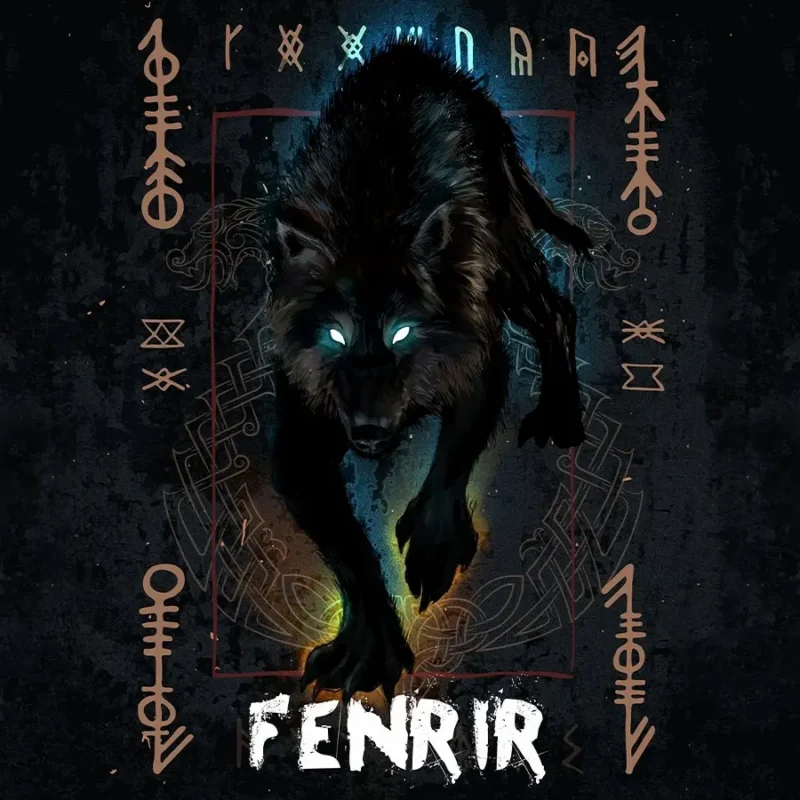
Fenrir is a famous Norse mythology creatures. He is a huge wolf, born of the trickster god Loki and the giantess Angrboda.
- Myth: He will break his chains and devour Odin, the Allfather, during Ragnarok, the Norse end of the world.
- Symbolism: Fenrir stands for chaos, fate, and wild forces. Even the gods fear him.
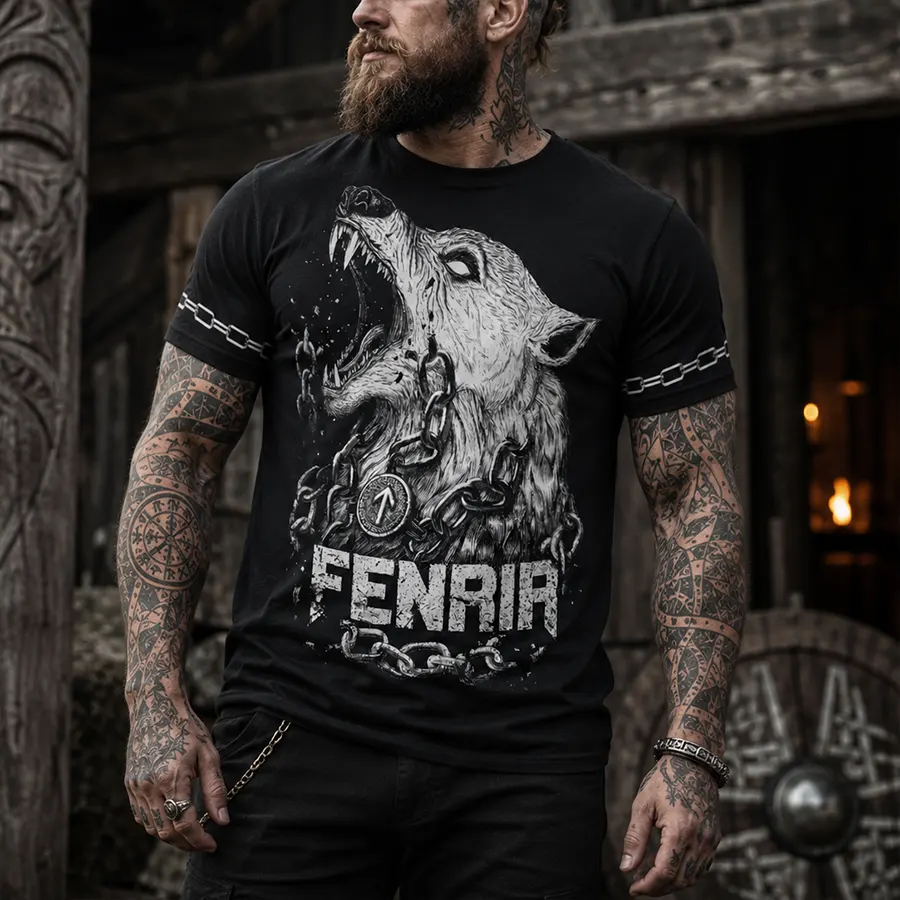
The fierce image of Fenrir, the legendary wolf of Norse mythology, captures the raw power and untamed spirit that made him one of the most feared beings in the Viking sagas. Wrapped in heavy chains yet refusing to submit, Fenrir symbolizes resilience, defiance, and the courage to challenge fate itself. The monochrome artwork and rugged details create a bold visual that reflects the wild strength hidden within every warrior. More than a mythical creature, Fenrir stands as a reminder that true power comes from refusing to be broken, even when the world tries to hold you back.
2. Jörmungandr – The Midgard Serpent
Jörmungandr, also known as the World Serpent, is another of Loki’s monstrous offspring.
- Myth: Cast into the sea by Odin, Jörmungandr grew so large that he encircled the entire world, biting his own tail.
- Ragnarok: Fated to battle Thor, the god of thunder, in a final showdown where both meet their ends.
- Symbolism: The serpent represents creation and destruction. It also symbolizes the dangers hidden in the unknown.
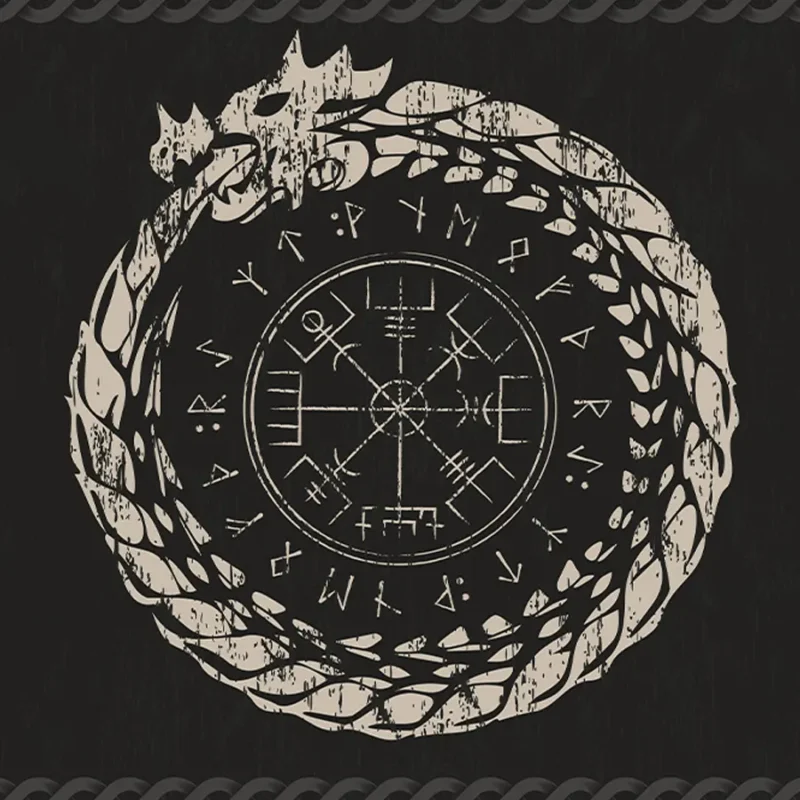
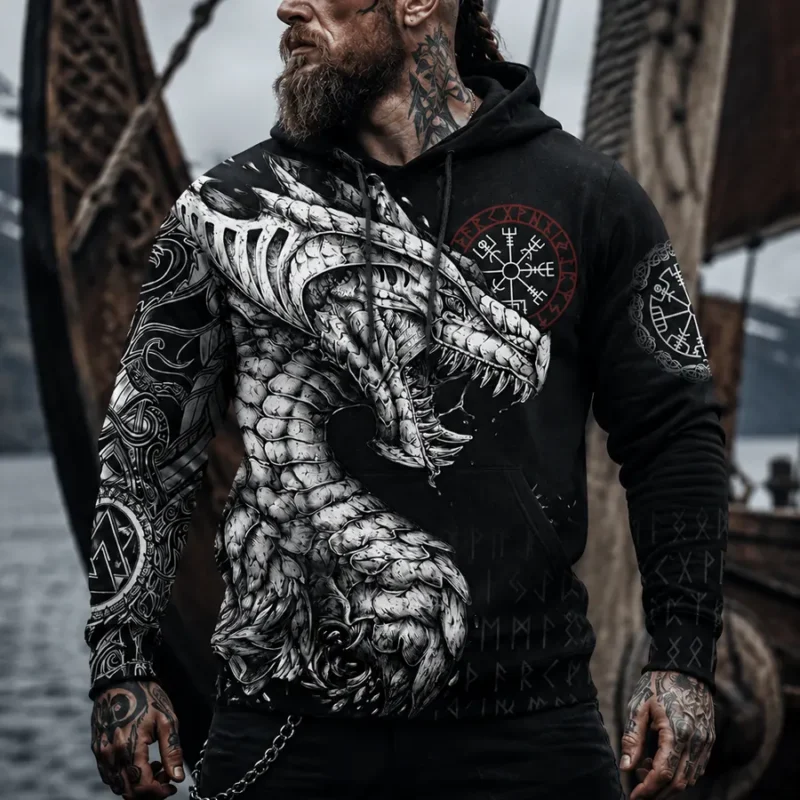
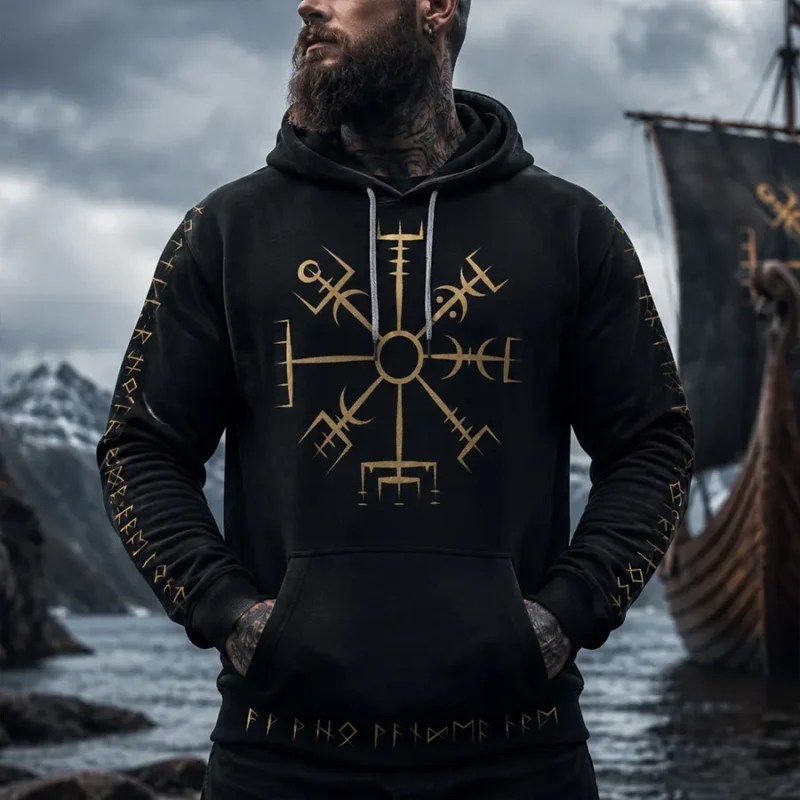
Dominating the design is Jormungandr, the mighty World Serpent of Norse mythology, depicted with fierce detail and an unmistakable presence. Encircling the world in the ancient sagas, Jormungandr symbolizes immense power, destiny, and the forces that shape the cosmos. The artwork is enhanced by intricate Nordic patterns, runic elements, and the Vegvisir, the Norse compass believed to guide travelers through uncertainty. Together, these symbols create a striking representation of strength, wisdom, and the courage to face whatever lies ahead. It is a tribute to those who embrace challenges, trust their path, and draw inspiration from the enduring legends of the North.
3. Sleipnir – Odin’s Eight-Legged Horse
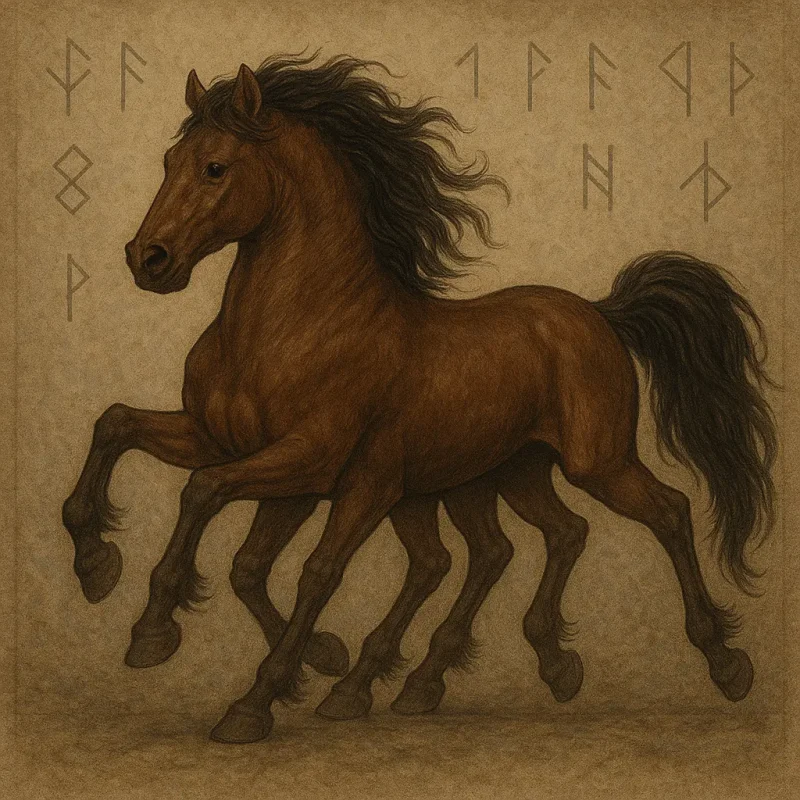
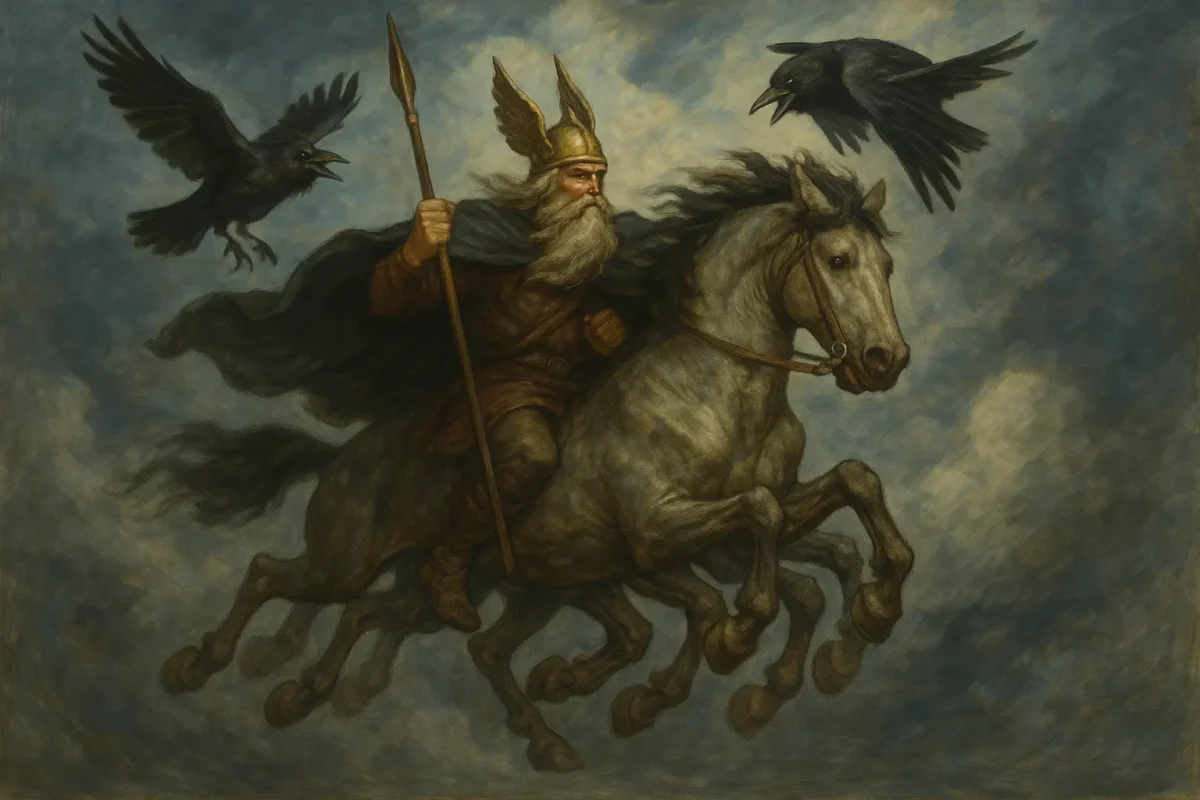
Among Norse mythology creatures, Sleipnir is a unique and mystical creature.
- Description: A gray stallion with eight legs. He was born of Loki, who turned into a mare, and the stallion Svaðilfari.
- Role: Sleipnir is Odin’s faithful horse. He can travel between worlds, taking gods and heroes to known and unknown realms.
- Symbolism: Represents speed, transcendence, and the shamanic journey between life and death.
4. Huginn and Muninn – Odin’s Ravens
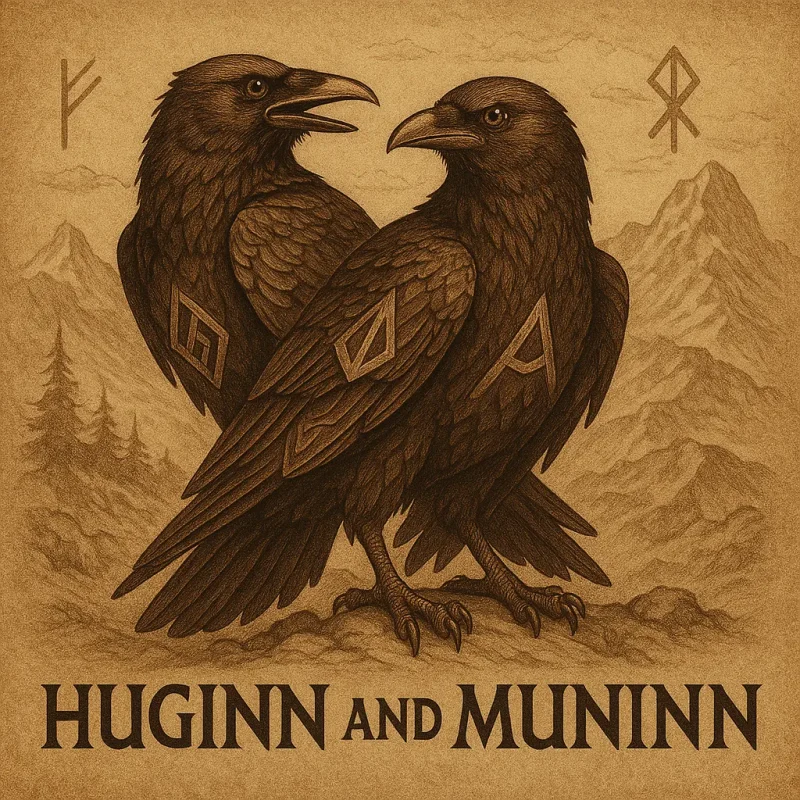
These intelligent ravens are not animals but are magical companions of Odin.
- Names: Huginn means “thought,” and Muninn means “memory.”
- Role: Each day, they fly over the world, gathering information and whispering it back to Odin.
- Symbolism: These Norse mythology creatures symbolize wisdom, vigilance, and the power of knowledge.
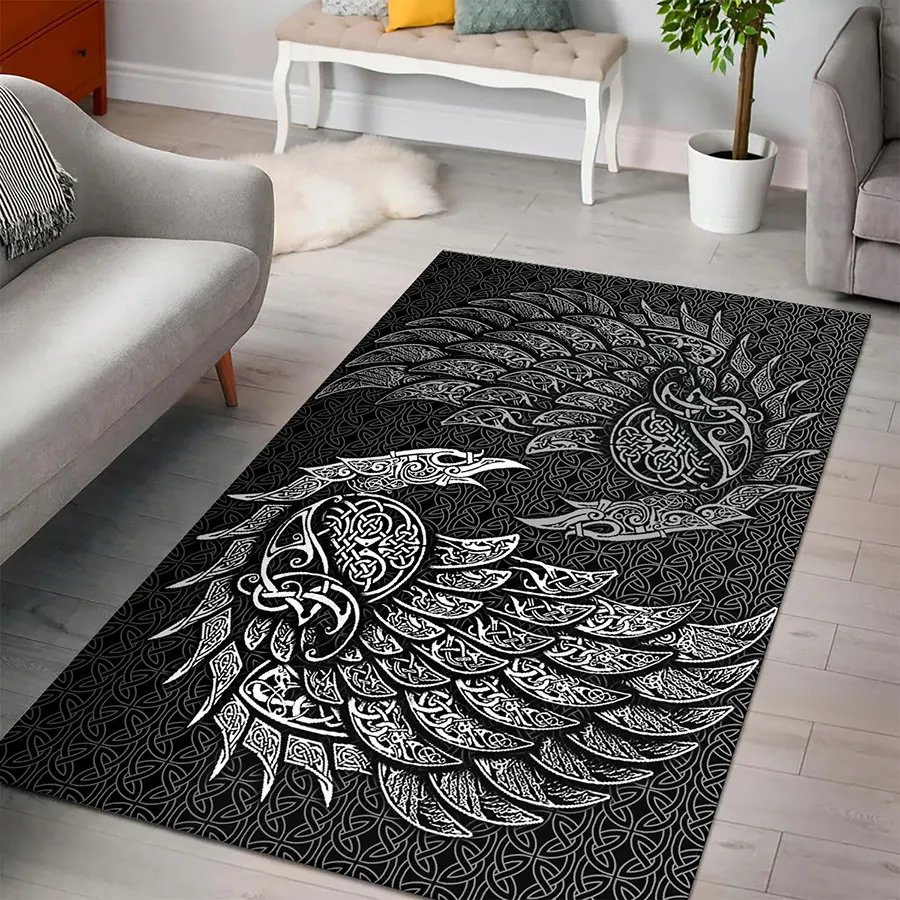
Inspired by Huginn and Muninn, the legendary ravens of Odin, this artwork embodies the pursuit of wisdom, knowledge, and insight. In Norse mythology, the two ravens traveled across the world each day, gathering information and returning to Odin with news of all they had seen and heard. Their intricate Celtic-inspired forms are woven into an elegant pattern of knotwork, symbolizing the interconnected nature of fate, memory, and thought. The striking black-and-silver contrast enhances the mystical atmosphere of the design, making it a powerful tribute to the wisdom and enduring legacy of the Norse gods.
5. Níðhöggr – The Dragon of Yggdrasil
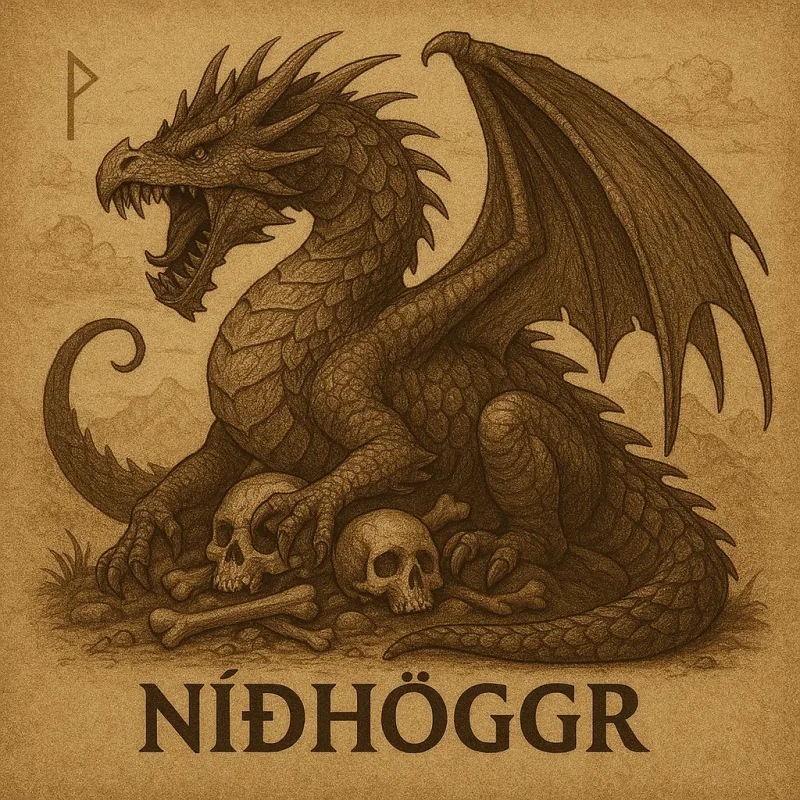
Deep beneath the roots of Yggdrasil, the World Tree, dwells Níðhöggr—a terrible dragon or serpent.
- Myth: Níðhöggr gnaws at the roots of the tree, threatening to bring about decay and destruction.
- Role: Feeds on dead bodies. Represents death, decay, and the forces that wear down even the strongest structures.
- Symbolism: A reminder of the constant balance between growth and decay.
6. Fafnir – The Greedy Dragon
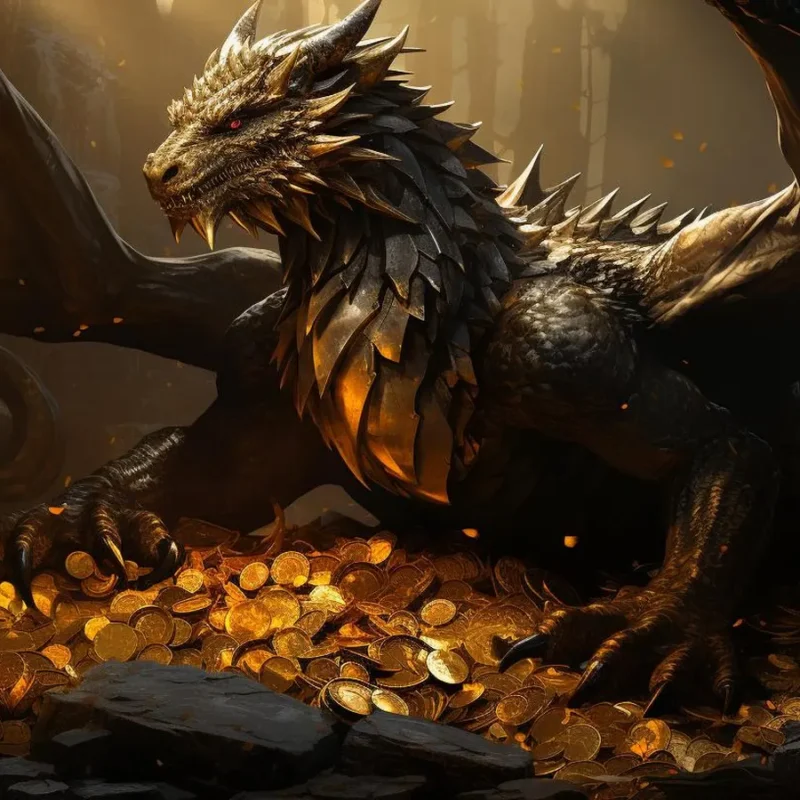
Fafnir, who began life as a dwarf, transformed into a dragon due to his overwhelming greed for gold.
- Legend: Fafnir hoarded a cursed treasure and was ultimately slain by the hero Sigurd.
- Symbolism: Fafnir represents how greed can destroy and change one’s spirit through obsession.
7. The Kraken – Sea Monster of the North

Norse sailors feared the Kraken more than any other giant sea creature. Its tales exist in many cultures.
- Description: Said to be so large that it could drag entire ships under with its tentacles.
- Role: The Kraken embodied the terrors of the open sea and the unpredictability of nature.
- Symbolism: Represents the unknown and the awe-inspiring power of the ocean.
8. Trolls – Giants of the Wilderness

No list of Norse mythology creatures is complete without trolls. These huge beings, which often display hostility, inhabit mountains, forests, and caves.
- Description: Trolls come in different sizes and smarts. They are usually seen as strong, slow, and dangerous.
- Myth: They frighten travelers, steal livestock, and may cast spells on the unwary.
- Symbolism: Trolls represent the dangers of the wild. They show the risks of isolation and the thin line between civilization and chaos.
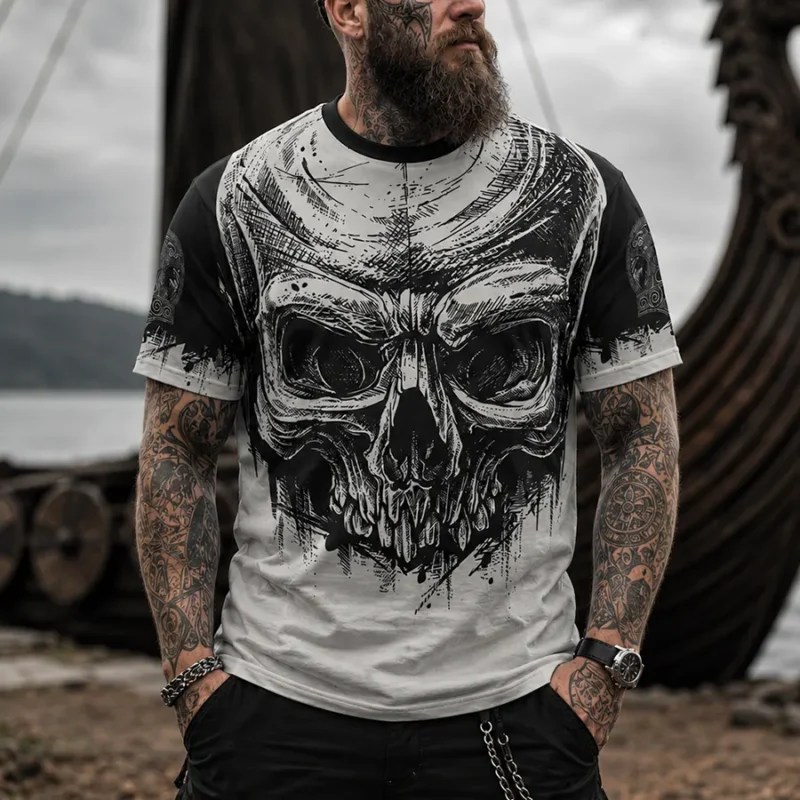
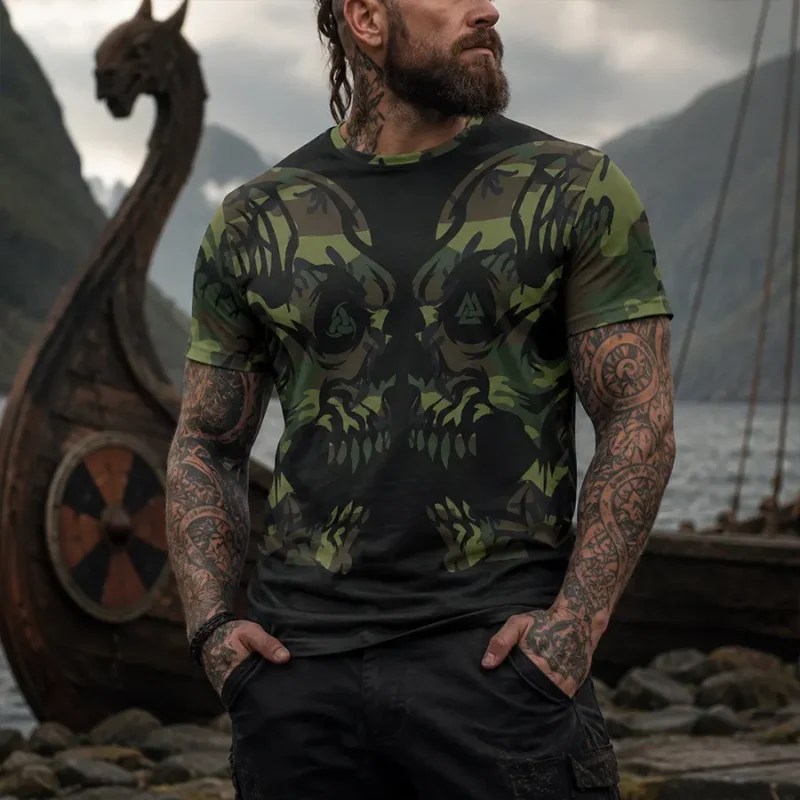

The Enduring Legacy of Norse Mythology Creatures
Norse mythology creatures were not just monsters or magical animals. They served as teachers, guardians, and omens for the Vikings. These beings helped us understand nature, life’s unknowns, and our fight with destiny.
Today, these legendary beasts appear in books, movies, tattoos, and art. They spark the imagination of people everywhere. The stories of Fenrir, Jörmungandr, Sleipnir, and others still charm us. They show that the world is full of wonder, danger, and endless adventure.
Conclusion: Monsters, Myths, and Meaning
From world-encircling serpents to raven messengers, the Norse mythology creatures of Viking lore reflect the beauty, terror, and mystery of the Norse worldview. These creatures call us to explore the ancient North. We can find inspiration, learn cautionary tales, or feel a deeper connection to the past. They lead us through shadowy forests, vast oceans, and star-filled skies. Their stories show the creativity and courage of those who first imagined them. They also inspire those who dream today.
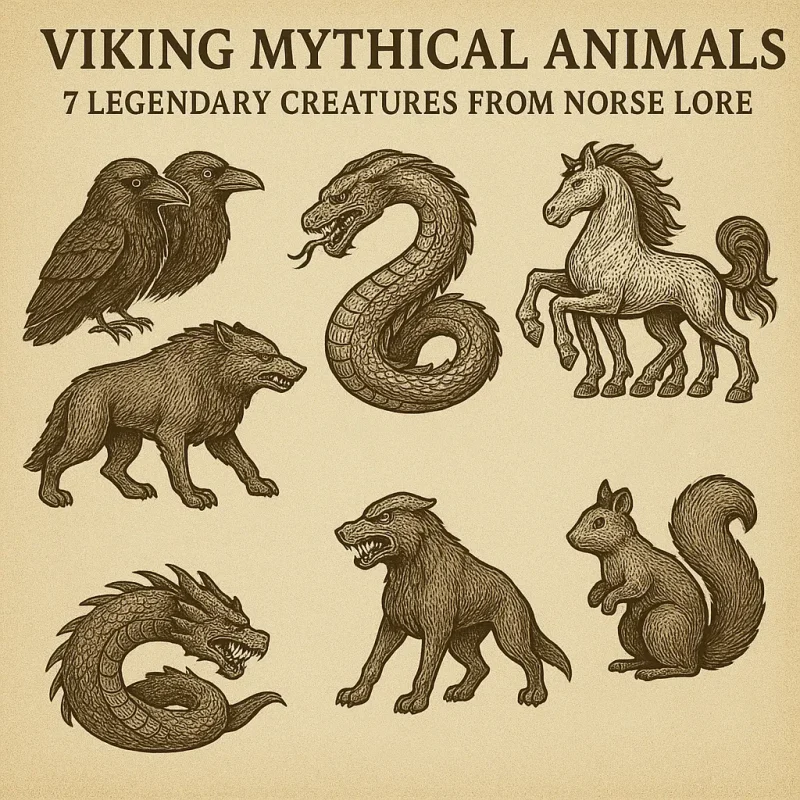
Viking Mythical Animals: 7 Legendary Creatures from Norse Lore
Viking legends are rich with gods, heroes, and epic battles. But the mythical animals of Norse mythology spark the imagination. These legendary creatures symbolize power, chaos, and fate. They were crucial in stories that formed Viking beliefs. These tales inspired awe for generations. Let’s explore seven of the most famous Viking mythical animals, their stories, and the deep symbolism they hold for the Norse people.